When the Sun Refuses to Set: Navigating the Physical and Mental Demands of Arctic Summer Light
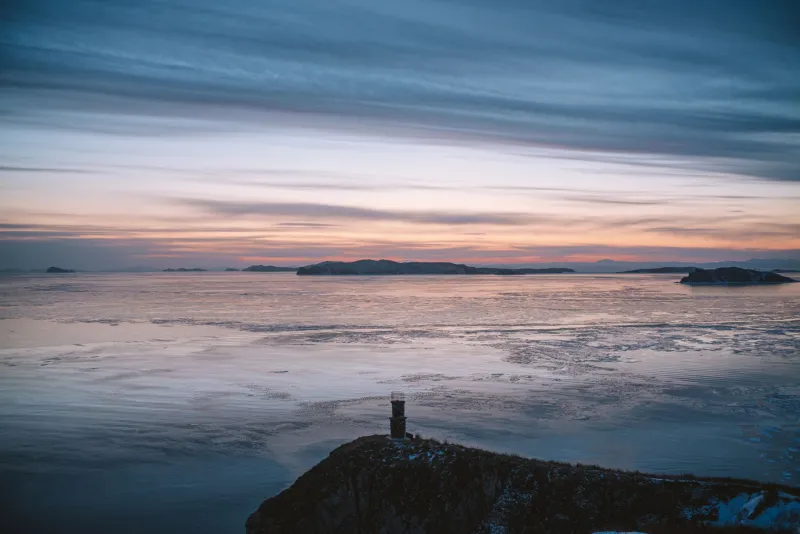
There is a particular moment that nearly every first-time summer Arctic expeditioner describes in nearly identical terms. It arrives sometime around what their watch insists is two in the morning. The light outside the tent — or the porthole, or the lodge window — is warm, golden, and entirely indifferent to the hour. The brain sends conflicting signals. The body says rest. The sky says otherwise. Welcome to the midnight sun paradox.
At Isbjørn Adventure, we have guided travelers through the Norwegian High Arctic, Svalbard, and the far reaches of Greenland across every season. Summer expeditions offer unparalleled access to wildlife, navigable waters, and landscapes that emerge from months of ice and darkness with extraordinary beauty. But they also confront travelers with a biological challenge that no amount of enthusiasm fully prepares them for: the complete absence of night.
What the Science Actually Says
Human circadian rhythms — the internal clocks governing sleep, hormone production, digestion, and mood — evolved in response to the 24-hour cycle of light and darkness. The hypothalamus, specifically the suprachiasmatic nucleus, uses light as its primary cue. When light enters the eye, it suppresses the production of melatonin, the hormone that signals the body to prepare for sleep. In the Arctic summer, that suppression is essentially continuous.
Research conducted at institutions including Norway's University of Tromsø and the University of Alaska Fairbanks has documented measurable disruptions to sleep architecture in individuals exposed to prolonged polar daylight. Study participants showed reductions in total sleep time, decreased REM sleep, and elevated cortisol levels — the stress hormone typically associated with morning alertness — at hours when the body would ordinarily be in deep recovery. The cumulative effect over days and weeks is something researchers politely call "circadian misalignment" and expedition travelers tend to describe in considerably less clinical language.
Cognitive performance is where this misalignment becomes more than an inconvenience. Studies examining workers on Arctic oil platforms and military personnel operating in polar environments have linked chronic sleep disruption to degraded reaction time, impaired risk assessment, and increased susceptibility to decision fatigue. On a wilderness expedition — where route-finding, weather interpretation, and wildlife protocols demand clear judgment — these are not trivial concerns.
The Psychological Dimension
Beyond the physiological, the midnight sun exerts a subtler psychological pressure. Human beings rely on the rhythm of day and night not only for physical rest but for psychological punctuation. Darkness signals an end to the day's demands; it marks transition, reflection, and closure. In its absence, many travelers report a creeping sense that time has become elastic and unanchored.
Some describe euphoria during the first 48 hours — a giddy, almost manic energy that comes with the sensation of having unlimited time and light. Experienced guides on Svalbard expeditions note that this phase often produces overconfidence: travelers who push past reasonable physical limits, underestimate distances, or dismiss fatigue signals because the light convinces them it is still early. The crash, when it arrives, can be abrupt.
Others experience the opposite: a low-grade unease, a difficulty feeling settled or at home in a landscape that refuses the familiar comfort of twilight. Isolation, unfamiliar terrain, and physical exertion compound these effects. It is not uncommon for even well-traveled, psychologically resilient individuals to feel emotionally raw or unusually irritable by the fourth or fifth day of uninterrupted daylight.
Practical Strategies for Managing Continuous Daylight
The good news is that preparation substantially mitigates these effects. The following approaches are drawn from expedition best practices and the accumulated experience of polar guides who operate in summer conditions regularly.
Invest in serious blackout solutions. A sleep mask is the minimum; a genuinely effective one — the kind that eliminates all peripheral light — is the standard. For lodge or vessel-based expeditions, ensure your accommodation provides blackout curtains rated for Arctic conditions. The difference between adequate and genuine darkness is the difference between four hours of fragmented sleep and seven hours of restorative rest.
Enforce a sleep schedule before you arrive. Beginning a consistent sleep and wake routine two weeks prior to departure, ideally shifting gradually toward the time zone of your destination, gives the circadian system a head start. Melatonin supplements, used at low doses and in consultation with a physician, can assist with this transition.
Observe analog time cues. Experienced Arctic travelers recommend maintaining strict meal times and scheduled rest periods regardless of external light. Eating, hydrating, and resting at consistent intervals provides the body with social and behavioral time cues that partially compensate for the absence of natural ones.
Limit stimulants in the evening hours. Caffeine consumption after mid-afternoon extends the body's difficulty suppressing alertness at bedtime. On multi-day expeditions, this is a surprisingly common error that compounds sleep debt progressively.
Communicate openly with your guide team. Reputable expedition operators — including those partnered with Isbjørn Adventure — build rest protocols into their itineraries precisely because they understand the cumulative toll of midnight sun conditions. If you are experiencing significant sleep disruption, disclose it. Guide teams cannot make sound safety decisions without accurate information about their group's physical and cognitive state.
What You Gain in Exchange
None of the above is intended to discourage the summer Arctic expedition. Quite the opposite. The midnight sun is not only a challenge — it is, in the truest sense, one of the destination's defining gifts.
The quality of Arctic summer light is unlike anything available at lower latitudes. Because the sun travels in a low arc across the horizon rather than ascending high overhead, the light remains in what photographers call the "golden hour" for hours at a time. Wildlife is active across what would otherwise be nocturnal hours: polar bears patrol the ice edge, Arctic foxes hunt, and seabirds wheel in extraordinary numbers. A traveler who has adapted successfully to the midnight sun gains access to a world that is simply not available elsewhere.
There is also something genuinely transformative about confronting the limits of one's own biological assumptions. The disorientation of the midnight sun has a way of loosening the grip of ordinary time — of the calendar, the clock, the habitual structure of daily life. Travelers who navigate that disorientation successfully often describe it as one of the more clarifying experiences of their lives.
The Arctic in summer does not accommodate the unprepared. But for those who arrive with clear expectations, sound sleep strategies, and a willingness to be genuinely unsettled by the world beyond the familiar, the midnight sun offers a kind of illumination that goes considerably deeper than daylight.