Expedition Dollars With Purpose: How to Travel the Arctic in Ways That Strengthen Remote Communities
Most Americans who begin researching an Arctic expedition focus, understandably, on the wildlife. The polar bears, the walrus haul-outs, the narwhal migrations — these are the images that appear in magazines and on expedition websites, and they are entirely real. What receives considerably less attention is the human geography of the Arctic: the fact that these landscapes are not uninhabited frontiers but living homelands, occupied continuously for thousands of years by communities whose relationship to the land and sea defines their identity.
The tourism industry's expansion into the High Arctic has produced outcomes ranging from genuinely transformative to quietly extractive. In some corridors, large cruise operators move thousands of passengers through Arctic waters each season, collecting fares that flow primarily to corporate headquarters in Miami or Oslo while leaving minimal economic trace in the communities passengers briefly visit. In others, smaller and more deliberate operations have built models that center local ownership, Indigenous expertise, and cultural authenticity in ways that materially benefit the people who live there.
For travelers who care about the distinction — and an increasing number of American adventure travelers do — understanding how to identify and support the latter category is both a practical and an ethical undertaking.
The Communities Leading the Way
Clyde River (Kangiqtugaapik), Nunavut, Canada
Situated on Baffin Island's northeastern coast, Clyde River is an Inuit hamlet of approximately 1,000 residents that has become one of the most cited examples of community-led Arctic tourism in North America. The local Inuit organization Piqqusilirivvik has worked with regional tourism operators to develop expedition packages guided entirely by Inuit hunters and elders, offering travelers access to sea-ice travel, traditional hunting knowledge, and cultural practices that no southern-based operator could authentically provide.
Revenue from these expeditions funds local programs including youth language preservation initiatives and traditional skills training — areas of acute need in a community where the transmission of Inuktitut and land-based knowledge to younger generations faces real pressure. Travelers who book through community-affiliated operators contribute directly to this infrastructure rather than to intermediary companies.
Ittoqqortoormiit, East Greenland
With fewer than 350 permanent residents, Ittoqqortoormiit is one of the most remote inhabited settlements in the world, accessible only by helicopter or — during a narrow summer window — by sea. It is also, increasingly, a destination for expedition travelers seeking genuine engagement with Greenlandic Inuit culture and the extraordinary wildlife of Scoresby Sound, the world's largest fjord system.
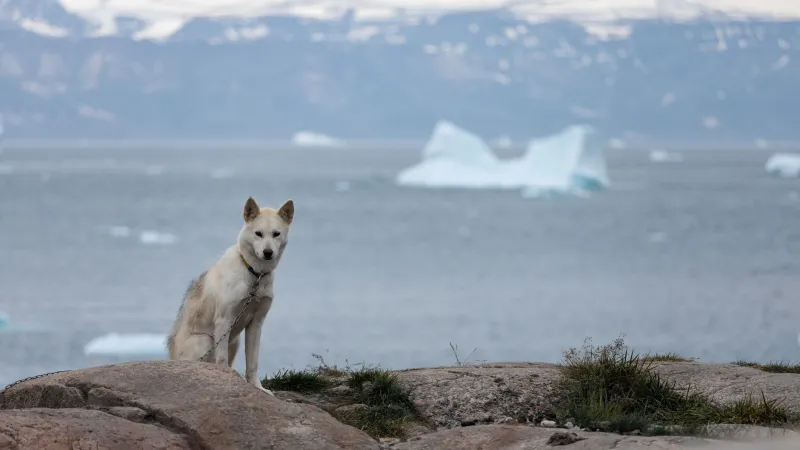
Local guides here offer dog-sledding expeditions, musk ox tracking, and access to hunting traditions that connect directly to the community's subsistence practices. The economic stakes are immediate and tangible: tourism revenue supplements an economy otherwise dependent on hunting and limited government support. Operators who work directly with local families — rather than routing bookings through Nuuk-based or European intermediaries — ensure that the margin reaches the household level.
Tromsø's Indigenous Sámi Partnerships, Northern Norway
Tromsø serves as a gateway city for much of Norway's Arctic expedition industry, and it has also become the site of an important experiment in Sámi-led tourism development. Several reindeer-herding families in the region surrounding Tromsø now offer structured expedition experiences — winter camps, traditional joik performances, and guided discussions of Sámi land rights and cultural history — that are operated and narrated entirely by community members.
What distinguishes the more responsible operators in this space is transparency about revenue distribution. The best of them publish clear information about the percentage of booking fees that flow to Sámi families versus the operational overhead retained by the organizing company. American travelers accustomed to asking hard questions about corporate supply chains are well-positioned to apply the same scrutiny here.
How to Evaluate an Operator's Community Commitment
The language of responsible tourism has become sufficiently widespread that it can obscure as much as it reveals. "Authentic," "local," and "sustainable" appear in the marketing materials of operators whose practices vary enormously. The following questions cut through the terminology.
Who owns the operation? Community ownership — whether through an Inuit development corporation, a Sámi family cooperative, or a municipal tourism authority — is the most reliable indicator that revenue circulates locally. Ask directly. Legitimate community-based operators will answer clearly and with specificity.
Who leads the expeditions? A company headquartered in Anchorage or Copenhagen that hires local guides on a seasonal, low-wage basis is structurally different from one in which the guides are principals or co-owners. The former extracts local knowledge; the latter compensates it appropriately.
What does the community say? Independent reviews from Arctic community organizations, Indigenous rights bodies, and academic researchers who study Arctic tourism provide a check on operator self-representation. Organizations such as the Inuit Circumpolar Council publish guidance on tourism practices, and their assessments are publicly available.
Is there a tangible community benefit beyond employment? The strongest operators contribute to specific, verifiable community projects: school programs, language archives, infrastructure development, or conservation initiatives managed by residents. Ask for examples and, where possible, verify them.
The Broader Case for Purposeful Arctic Travel
There is a version of Arctic tourism that treats these landscapes as a backdrop for personal achievement — the expedition as bucket-list experience, the community as color, the wildlife as content. That version exists, and it is well-funded and heavily marketed.
There is another version in which the traveler arrives understanding that the Arctic is not theirs to consume but a place to be received, carefully, by people who have sustained it for generations. This version requires more research, more flexibility, and sometimes a willingness to pay a premium that reflects the true cost of ethical operation. It also tends to produce experiences of considerably greater depth.
At Isbjørn Adventure, our partnerships in the Nordic Arctic are selected in part on the basis of how they engage with the communities in their operating areas. We believe that genuine polar adventure — the kind that changes how a person understands wilderness, resilience, and their own place in the natural order — cannot be separated from genuine respect for the people who call these places home.
The traveler who books a community-led dog-sledding expedition in East Greenland, or a Sámi winter camp outside Tromsø, is not sacrificing adventure for virtue. They are accessing a dimension of the Arctic that the purely extractive model never reaches: the lived knowledge, the inherited relationship with the land, the perspective that comes from generations of presence rather than weeks of passage. That is not a compromise. It is, by any honest measure, the deeper journey.