Ruins on the Ice: What Abandoned Arctic Outposts Teach Us About Human Ambition and Its Limits

Photo by Photo by Alexander Popovkin on Unsplash on Unsplash
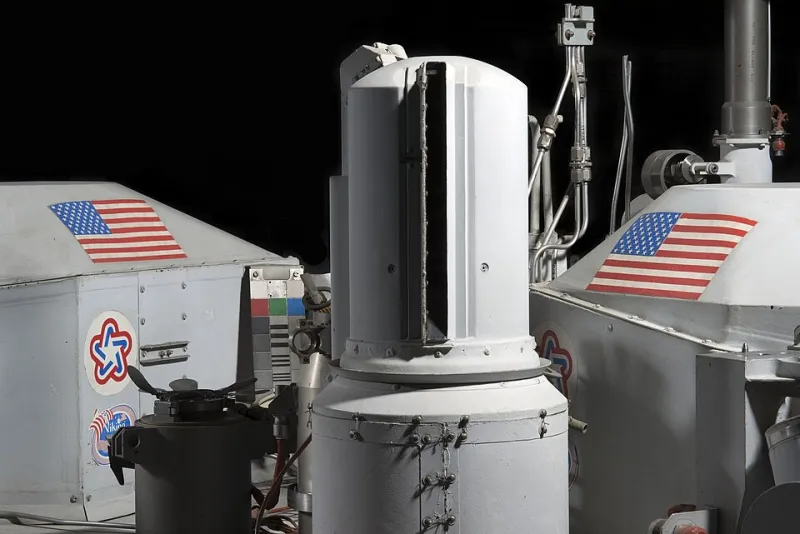
The photographs almost never make the brochures. Rusted fuel drums stacked against a collapsed prefabricated wall. A Soviet-era mess hall with the dinner table still set, chairs pushed back as though the occupants stepped out moments ago and simply never returned. A weather station perched on a basalt ridge, its instruments facing a horizon no living scientist has read in forty years.
These are the Arctic's ghost towns—decommissioned research bases, abandoned mining camps, and Cold War installations whose operational lifespans proved far shorter than the ambitions that built them. They exist across the high Arctic in surprising number, and for a particular kind of traveler, they represent something the pristine wilderness cannot offer: evidence.
A Freezer Full of History
The Arctic's extreme cold is, among other things, an extraordinary preservative. Where tropical ruins are consumed by vegetation and humidity within decades, polar abandonment produces a different kind of decay—slow, selective, and often eerie in its specificity. A wooden chair rots while a wool coat hangs intact on the peg beside it. Paperwork yellows but remains legible. Bootprints in dried mud endure long after the boots themselves have been reclaimed by the elements.
This preservation is precisely what makes abandoned Arctic outposts so compelling as expedition destinations. They are not merely ruins. They are archives—imperfect, atmospheric, and frequently more honest than the official records that accompanied their construction.
Consider Pyramiden, the Soviet-era mining settlement on Svalbard that was evacuated in 1998 with a haste that suggests something closer to flight than planned decommissioning. At its peak, it housed over a thousand residents—miners, engineers, teachers, physicians—in a self-contained community that the Soviet government designed as a showcase of socialist prosperity in the high Arctic. The swimming pool, the cultural center, the bust of Lenin that still presides over the town square with undiminished authority: all of it remains, frozen not merely by temperature but by the abruptness of departure.
Walking through Pyramiden is an experience that resists easy categorization. It is part historical site, part art installation, part cautionary tale about the relationship between ideology and geography. The ambition that built it was genuine. So was the failure that emptied it.
Cold War Coordinates
Pyramiden is perhaps the most visited of the Arctic's abandoned settlements, but it is far from the only one worth the journey. Scattered across the Norwegian archipelago and the broader circumpolar region are the remnants of installations whose Cold War purposes were rarely as scientific as their official designations suggested.
Long-range radar arrays, built to monitor Soviet aircraft movements across the polar ice cap, now stand inoperative on ridgelines that once represented the forward edge of Western defense infrastructure. Underground listening posts, their entrances partially collapsed, dot coastlines that saw more geopolitical anxiety than wildlife in the mid-twentieth century. Several of these sites have been partially declassified and are accessible to expedition groups traveling with properly permitted guides.
What distinguishes these locations from conventional historical monuments is the absence of interpretive mediation. There are no plaques explaining what you are meant to feel. No carefully curated exhibits contextualizing the era. The sites exist in a state of raw abandonment that demands the visitor do the interpretive work themselves—a process that, for many travelers, proves unexpectedly affecting.
"You stand in a room where someone spent a winter monitoring transmissions they weren't permitted to discuss with anyone outside the installation," says one Isbjørn Adventure expedition guide who has led groups to several decommissioned Cold War sites. "And you realize that the loneliness those operators experienced wasn't incidental to the mission. It was part of the architecture. The isolation was a design feature. That realization lands differently when you're standing in the actual space."
What the Ruins Photograph
For photographers traveling with Isbjørn Adventure, abandoned Arctic installations present compositional opportunities that differ fundamentally from wildlife or landscape work. The challenge is not patience or timing—the frozen interiors do not move—but rather the problem of rendering atmosphere through a lens.
The most successful images from these locations tend to resist the obvious. The wide establishing shot of a derelict building against a dramatic sky is available to anyone. The photographs that endure are the close ones: a rusted hinge on a door that opens to nothing, a child's drawing pinned to a wall in the abandoned schoolhouse at a former mining settlement, the specific quality of light that enters a room through a window whose glass has been replaced by forty years of accumulated frost.
Shooting in these environments also requires practical preparation. Interiors are frequently unstable, and the combination of low light, extreme cold, and structurally compromised flooring demands both technical competence and physical caution. Battery performance degrades rapidly in sub-zero temperatures, making redundancy essential. And the emotional weight of these spaces—which many photographers describe as genuinely oppressive in ways that are difficult to anticipate—can affect concentration in ways that technical preparation alone cannot address.
The Argument for Imperfect Places
There is a tendency in expedition travel marketing to emphasize the untouched—the pristine glacier, the undisturbed wildlife, the landscape that appears to have existed in its current form since before human consciousness. This is understandable. These images are powerful, and the experiences they represent are genuine.
But the abandoned outpost argues for something different. It insists that the human presence in the Arctic—however failed, however hubristic, however brief—is also part of the story. The mining camp that poisoned the permafrost. The research station that produced climate data now considered foundational to our understanding of global warming. The military installation that monitored a threat that never materialized. These places are not blemishes on an otherwise pristine narrative. They are chapters in it.
Travelers who visit them often return with a more nuanced relationship to the idea of wilderness itself. The Arctic, they discover, has not been untouched. It has been attempted—repeatedly, ambitiously, and with consequences that persist long after the last occupant departed. Understanding that history does not diminish the landscape. It deepens it.
Isbjørn Adventure includes select abandoned site visits in several of its expedition itineraries, with access arranged through appropriate Norwegian and international heritage authorities. Travelers interested in prioritizing these locations should discuss options during the pre-departure planning process, as site accessibility varies by season and requires advance coordination with permitting bodies.