Beyond the Price Tag: What Arctic Communities Reveal About the True Currency of Human Exchange
There is a moment that many Isbjørn Adventure expedition participants describe in similar terms, though they arrive at it through different circumstances. It might occur when a hunter offers a portion of his catch to a stranger without expectation of payment. It might happen when a family insists on mending a visitor's damaged gear simply because the task needs doing. Whatever the trigger, the realization is the same: the rules governing exchange in these remote Arctic settlements are fundamentally unlike anything most Americans have encountered before.
For travelers accustomed to the transactional clarity of credit cards and delivery apps, spending even a few days within communities that operate according to entirely different economic logics can be quietly disorienting — and, ultimately, transformative.
A Different Kind of Ledger
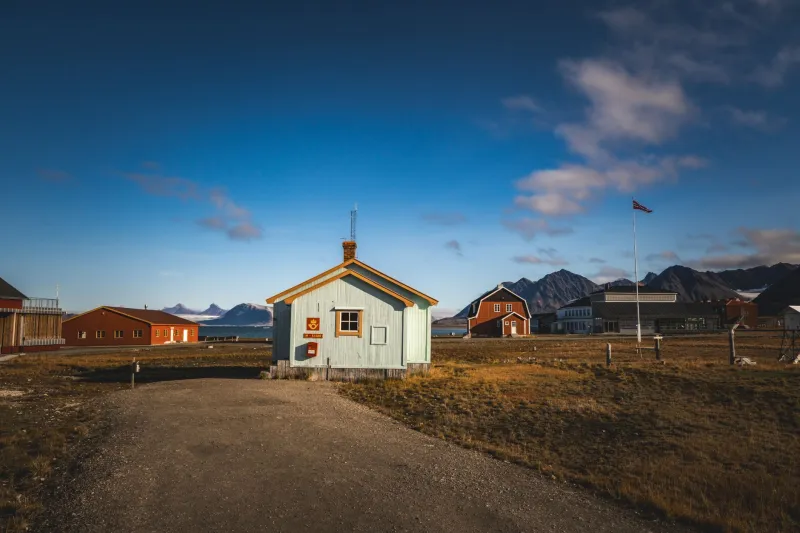
Across the high Arctic — from the isolated villages of Svalbard's fringes to the small settlements dotting the northern Norwegian coast — many communities have long maintained economic practices that sit well outside the conventional market framework most Westerners inhabit. These are not primitive arrangements born of necessity alone. They are sophisticated systems refined over generations, designed to distribute risk, sustain trust, and ensure collective survival in one of the planet's most unforgiving environments.
At their core, these systems function through reciprocal exchange rather than monetary transaction. A family that harvests an abundance of reindeer meat in autumn does not sell the surplus; it distributes it, knowing that in a difficult winter or a lean hunting season, the community's generosity will flow back. The ledger is social rather than financial, and the debts recorded within it are measured in goodwill, obligation, and memory rather than currency.
Anthropologists have long studied such arrangements under the broad term "gift economies," a concept associated with the work of Marcel Mauss, whose early twentieth-century scholarship examined how non-market exchange systems create and reinforce social bonds. What makes the Arctic context particularly striking is how vigorously these practices persist in communities that are not entirely cut off from global markets — communities that purchase fuel, communicate via satellite, and follow international news — yet continue to organize their most fundamental exchanges around principles of sharing rather than selling.
What Visitors Witness on Expedition
Isbjørn Adventure expeditions that include community visits are designed to offer genuine engagement rather than observation from a respectful distance. Participants who spend time in these settlements quickly notice that the local economy operates across multiple registers simultaneously. There is, of course, a conventional cash economy: goods are purchased at the small local store, guides accept payment for their services, and fuel costs money everywhere in the Arctic. But layered beneath and alongside these transactions is a parallel system of exchange that governs many of the most essential resources.
Food sharing is perhaps the most visible expression of this. In communities where hunting and fishing remain central to both diet and identity, the distribution of a successful harvest is governed by custom rather than commerce. Certain portions of a catch belong, by longstanding tradition, to specific members of the community — elders, families without hunters, those who contributed labor or equipment to the expedition. Visitors who are welcomed into a home after a hunt may find themselves included in this distribution not as paying guests but as temporary members of the social network, expected to receive and, in whatever way they are able, to contribute in return.
Barter, too, remains a living practice rather than a historical curiosity. Skills, labor, and handmade goods circulate through informal exchange networks that bypass money entirely. A woman who sews traditional garments may receive help with firewood or repairs to her home. A man with mechanical knowledge may keep a neighbor's snowmobile running in exchange for access to a boat during the brief open-water season. These arrangements are rarely formalized in writing; they are sustained by reputation, relationship, and the shared understanding that everyone's wellbeing depends on everyone else's reliability.
Challenging American Assumptions About Value
For most Americans, the encounter with these systems arrives as a gentle but persistent challenge to assumptions so deeply embedded they rarely surface as assumptions at all. The belief that fair exchange requires a price, that generosity is a personal virtue rather than a structural necessity, that accumulation is the natural goal of economic activity — these ideas, which shape so much of daily life in the United States, simply do not map onto what visitors observe in remote Arctic communities.
This is not to romanticize poverty or suggest that life in isolated northern settlements is without hardship. The Arctic imposes genuine material constraints, and the communities that have adapted to those constraints have done so through hard-won pragmatism, not idealism. What they have developed is not a utopia but a functional response to conditions that make hoarding dangerous and cooperation essential.
What expedition participants frequently report upon returning home, however, is that this pragmatism carries a philosophical weight that outlasts the journey itself. Many describe reconsidering their relationship with consumption — questioning, for the first time, the volume of goods they acquire, the degree to which their daily lives involve genuine reciprocity with neighbors and community members, and the extent to which monetary exchange has substituted for the kinds of relationship-building that once formed the connective tissue of American community life.
The Expedition as Economic Education
Isbjørn Adventure designs its community engagement itineraries with the understanding that the most enduring lessons of polar travel are rarely the ones that appear in the trip briefing materials. Participants can prepare themselves intellectually for what they will encounter — reading about gift economies, studying the history of Arctic settlement, familiarizing themselves with the cultural practices of the communities they will visit — and still find that the lived experience reshapes their thinking in ways that preparation cannot fully anticipate.
There is something about witnessing these exchange systems in action, about being present when a neighbor arrives unannounced with surplus food or when a community meeting organizes collective labor for a shared task, that moves the understanding from the intellectual to the visceral. Travelers who have spent their professional lives in environments governed by contract, invoice, and quarterly return find themselves in the presence of an economic logic that is equally coherent and far older.
Carrying the Lesson Home
The question that many Isbjørn Adventure participants carry back with them is not whether Arctic gift economies could or should be transplanted into American life — the conditions that shaped these systems are specific, and their direct application elsewhere is neither simple nor necessarily appropriate. The more productive question is what these communities illuminate about the choices embedded in any economic arrangement.
Every society makes decisions, consciously or not, about what it values, what it distributes, and how it defines obligation between its members. The remote settlements of the high Arctic have made those decisions in response to extreme conditions and long experience. Their answers are different from the ones that prevail in Minneapolis or Phoenix or Charlotte — and it is precisely that difference, encountered at close range, that gives this particular form of polar travel its lasting power.
The ice, as Isbjørn Adventure has long understood, does not only teach through cold and silence and scale. Sometimes it teaches through the quiet spectacle of a community that has found a different way to keep everyone warm.