When the Cold Becomes Familiar: The Strange Peace Found in the Arctic's Harshest Hours
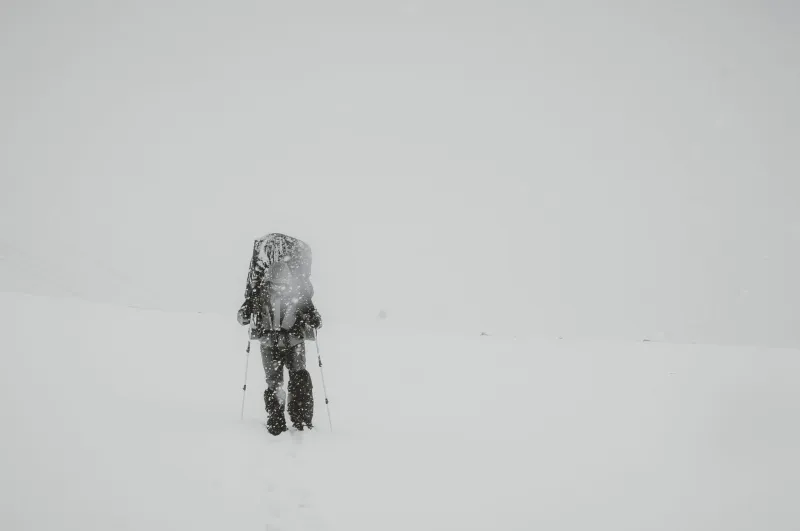
There is a particular moment that veteran polar guides at Isbjørn Adventure have learned to recognize. It arrives not during the golden hours of a midnight sun or the electric display of the aurora borealis, but in the middle of something far less picturesque: a whiteout squall, a temperature plunge that makes every exposed inch of skin ache, a stretch of sea ice that offers no shelter and no certainty. The traveler goes quiet. The body hunches against the wind. And then, inexplicably, the face relaxes.
They are not suffering. They are, by their own account, at peace.
This is the paradox that draws researchers, psychologists, and expedition veterans into prolonged conversation—and it is a paradox that anyone considering a polar journey deserves to understand before they set foot on the ice.
The Comfort That Discomfort Builds
American culture has constructed an elaborate architecture around the avoidance of discomfort. Climate-controlled offices, next-day delivery, noise-canceling headphones, algorithmic feeds calibrated to individual preference—the modern infrastructure of daily life is, in large part, a machine designed to eliminate friction. This is not without value. But something is lost in the process, and travelers who venture into the High Arctic frequently discover precisely what that something is.
Psychologists refer to the broader concept as adversity-induced clarity—a sharpening of perception and emotional awareness that occurs when external demands become so immediate and physical that the mind is forced to abandon its usual ambient noise. In the Arctic, this process is accelerated. When frostbite risk becomes a genuine calculation and visibility collapses to a few meters, the psychological chatter that typically occupies the American mind—career anxieties, social comparisons, unread notifications—simply cannot compete. The body demands full attention. And in receiving it, the mind experiences something it rarely does: relief.
This is not a romantic abstraction. It is a measurable cognitive state. Research into high-stakes outdoor experiences consistently shows that environments requiring genuine physical vigilance produce significant reductions in ruminative thinking—the repetitive, self-referential thought loops that underlie much of the anxiety and dissatisfaction reported by adults in developed nations.
Why the Arctic, Specifically
Many environments can produce stress. What makes the polar landscape distinct is the particular quality of its demands. The Arctic does not threaten in the way a chaotic urban environment does—with noise, social judgment, or unpredictable human behavior. Its demands are elemental and, in a strange way, fair. The cold does not single anyone out. The wind applies equal pressure to everyone standing in it. There is a democratic clarity to the Arctic's indifference that travelers frequently describe as, paradoxically, welcoming.
Guides leading Isbjørn Adventure expeditions across Svalbard and the Norwegian High Arctic have noted that guests who arrive with the heaviest professional and personal burdens often respond most strongly to the environment's most extreme moments. One expedition leader described watching a Chicago-based executive—a person accustomed to managing dozens of variables simultaneously—stand motionless in a force-seven gale on the edge of a glacier, eyes closed, breathing slowly. When asked afterward what he had been experiencing, the man said simply: I didn't have to be anything.
That phrase—I didn't have to be anything—recurs in the accounts of polar travelers with striking frequency. It points to something the Arctic provides that is genuinely rare in contemporary American life: permission to exist without performance.
The Role of Physical Anchoring
There is also a purely physiological dimension to this phenomenon that should not be overlooked. When the body is subjected to serious cold, it activates a cascade of survival responses—elevated norepinephrine, increased cardiovascular output, heightened sensory acuity. These are the same neurological systems associated with states of focused engagement and, in moderate doses, euphoria. Cold-water immersion research has documented the mood-elevating effects of these responses, and the Arctic amplifies them across an entire expedition rather than a single controlled session.
The body, in other words, knows what to do in the cold. It has been doing it for hundreds of thousands of years. And when it is given the opportunity to do so—to engage its full repertoire of adaptive responses in an environment that genuinely requires them—many people experience something that functions like homecoming. Not comfort in the conventional sense, but rightness. A sense that this is what the body was built for, and that modern life has simply not provided the occasion to demonstrate it.
Preparing to Meet Your Harshest Moment
Understanding this paradox has practical implications for anyone planning a polar expedition. The travelers who benefit most from the Arctic's more demanding passages are those who have prepared adequately—not to eliminate hardship, but to engage it without panic. There is a meaningful difference between adversity that clarifies and adversity that overwhelms, and the line between them is largely drawn by preparation.
Proper layering systems, practiced navigation of whiteout conditions, and familiarity with the warning signs of cold-related injury all serve the same ultimate purpose: they allow the traveler to remain present during difficult moments rather than retreating into fear. When the body is confident in its protection, the mind is free to experience the full psychological weight of the environment—and it is in that weight, paradoxically, that the peace is found.
Isbjørn Adventure structures its expedition itineraries with this arc in mind. The early days of any polar journey are deliberately calibrated to build competence and physical acclimatization. By the time a true storm or a sustained stretch of challenging terrain arrives, most travelers have developed enough confidence in themselves and their equipment to remain open rather than defensive. The harshest moments, when they come, arrive to a prepared audience.
What You Carry Back
The peace found in the Arctic's most brutal hours does not evaporate at the airport. Travelers returning from polar expeditions consistently report a recalibration of their tolerance for daily discomfort—a reduced reactivity to minor frustrations, a greater capacity to remain grounded under professional and personal pressure. The mechanism is straightforward: once the body has demonstrated its ability to function and find equilibrium in genuinely extreme conditions, the ordinary stressors of American life lose some of their psychological authority.
This is not a guarantee, and it is not the primary reason to travel north. The Arctic demands to be respected on its own terms, not instrumentalized as a therapeutic intervention. But it is worth knowing, before you book your expedition, that the moment you are most likely to dread—the moment the cold becomes undeniable and the landscape turns hostile—may also be the moment you feel most completely, and most surprisingly, yourself.