Stripped Clean: What the Arctic Does to a Body Built on Convenience
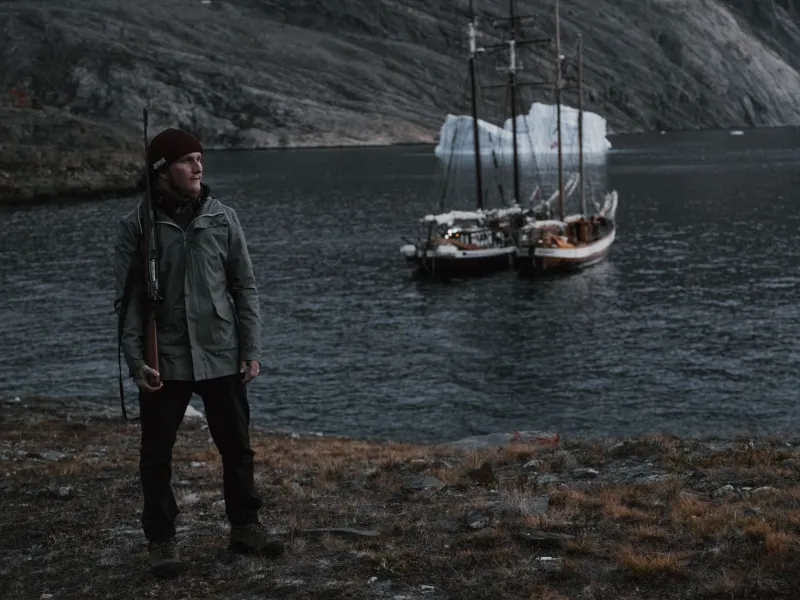
Most Americans board their first polar expedition vessel with a checklist in hand: insulated layers, waterproof boots, a camera capable of capturing a polar bear at distance. What rarely appears on that list is any preparation for what the expedition will do to their nervous systems, their gut microbiome, or the stress hormones quietly governing their daily existence back home. The Arctic does not ask permission before it begins its work.
Within the first 72 hours of entering a genuinely remote polar environment — one without reliable WiFi, without a convenience store within a hundred miles, and without the ambient hum of central heating regulated by a thermostat — the body initiates a cascade of responses that researchers studying wilderness immersion have documented with increasing precision. Understanding those responses is not a reason to hesitate. It is, for many travelers, the most compelling reason to go.
The First 72 Hours: Withdrawal Without a Substance
The initial phase of Arctic immersion is, for most first-time expedition travelers, the most disorienting. The absence of cellular connectivity produces symptoms that clinicians studying technology dependency have compared, in mild form, to behavioral withdrawal. Restlessness, a persistent sense of incompleteness, and the reflexive reach toward a pocket or wrist where a device once lived are all commonly reported. These are not signs of weakness. They are signs of a nervous system that has been conditioned, over years, to expect a specific and relentless input stream.
Cortisol, the body's primary stress hormone, behaves in unexpected ways during this period. Studies examining wilderness immersion have found that cortisol levels often spike modestly in the first day or two — a response to genuine novelty and mild environmental stress — before beginning a decline that, by the end of the first week, frequently places participants well below their baseline urban readings. The body, it appears, requires a brief period of recalibration before it begins to regulate itself more efficiently.
Digestion also shifts. Travelers accustomed to eating on irregular schedules, grazing on processed foods, or consuming meals in front of screens report that their appetite patterns normalize with surprising speed in polar environments. Expedition meals, served at consistent intervals and consumed without digital distraction, appear to restore a more ancestral rhythm of hunger and satiety. Several travelers on extended Isbjørn Adventure expeditions have described noticing, for the first time in years, what genuine hunger actually feels like — distinct from boredom, stress, or habit.
Sleep as a System Reboot
Perhaps no metric shifts more dramatically during Arctic expeditions than sleep quality. The mechanisms are multiple and reinforcing. Physical exertion — hiking across tundra, navigating Zodiac craft through ice-filled fjords, maintaining balance on moving expedition vessels — produces a muscular fatigue that most desk-bound Americans have not experienced since childhood. The body, given sufficient physical demand, reverts to prioritizing deep, restorative sleep in ways that no supplement or sleep hygiene protocol reliably replicates.
Cold exposure plays a contributing role. Moderate, managed cold — the kind encountered on a well-equipped polar expedition rather than in a survival scenario — has been associated with improved sleep onset and extended slow-wave sleep phases. The body's thermoregulatory systems, actively engaged throughout the day, appear to support deeper nocturnal recovery as a compensatory mechanism.
Light presents its own complexity. In Arctic summer, the sun's persistence disrupts circadian rhythms in ways that require active management — quality blackout curtains in expedition cabins are not a luxury but a physiological necessity. In the shoulder seasons favored by many Isbjørn Adventure itineraries, however, the quality of natural light — low-angle, diffuse, and free of the blue-spectrum saturation emitted by screens — supports melatonin production in patterns closer to what human biology evolved to expect.
What Convenience Had Been Masking
By the end of the first week, something quieter begins to emerge beneath the physical recalibration. Travelers frequently report an increased sensitivity to sensory experience that they describe, initially, with some confusion. Food tastes more vivid. Cold air carries a specificity of scent that seems almost architectural. The sound of a distant walrus colony or the creak of shifting sea ice registers with an attentiveness that daily life at home had not previously demanded.
This heightened sensory acuity is not mystical. It is, in part, a neurological consequence of reduced background stimulation. The human brain, no longer managing the low-grade cognitive load of notification alerts, ambient traffic noise, and the perpetual availability of entertainment, reallocates processing resources. Attention, freed from its habitual fragmentation, consolidates. Perception sharpens.
What this reveals, uncomfortably for some travelers, is the degree to which modern American convenience had been functioning as a buffer — not merely providing comfort, but actively preventing the body and mind from registering their own states. Fatigue, hunger, anxiety, and even pleasure had been mediated through layers of technology and consumption that the Arctic, without ceremony, simply removes.
The Adaptation Timeline: What Research Suggests
For travelers planning their first extended polar expedition, understanding the approximate timeline of physiological adaptation can reduce the anxiety of the initial phase. The first three days tend to be the most challenging: the body is managing novelty, the nervous system is recalibrating its input expectations, and sleep may be irregular. Days four through seven typically bring stabilization. Appetite normalizes, sleep deepens, and the reflexive urgency associated with connectivity begins to recede.
By the second week — the point at which many Isbjørn Adventure expedition packages reach their midpoint — most travelers report entering what they describe as a different mode of functioning altogether. Decision-making feels less effortful. Emotional reactivity decreases. A capacity for sustained, unhurried attention emerges that many participants identify as the most valuable thing they carry home.
Cortisol data gathered from wilderness immersion studies supports these subjective accounts. By day ten to fourteen of remote exposure, many participants show stress hormone profiles that differ meaningfully from their urban baselines — not because the Arctic is without challenge, but because the challenges it presents are legible, physical, and finite in ways that the ambient stressors of American professional life are not.
Returning, and What It Costs
The re-entry into connectivity is its own data point. Travelers returning from extended Arctic expeditions frequently describe the first hours of restored WiFi access as genuinely jarring — a flood of input that, after two weeks of polar quiet, feels disproportionate to the information it actually contains. The body, having recalibrated downward, registers the noise of modern life with a new and temporary clarity.
This window — the days immediately following an expedition — is, by nearly universal account, the period in which the value of the preceding weeks is most legible. Sleep quality, which had improved in the field, often declines again within days of return. Appetite patterns, briefly normalized, begin drifting back toward convenience-driven irregularity. The cortisol numbers, in the absence of sustained intervention, trend upward.
What the Arctic offers, in this light, is not a permanent cure. It is a controlled experiment in what the human body is capable of when the systems obscuring its baseline are temporarily removed. The results, for most travelers, are informative enough to change how they understand their ordinary lives — and compelling enough to bring them back.
For those considering their first polar expedition, Isbjørn Adventure's extended itineraries are designed with sufficient duration to allow this physiological arc to complete. A long weekend in a cold climate produces discomfort. Two weeks in the genuine Arctic produces something closer to evidence.