When Time Stops Being Scarce: What Arctic Summer Daylight Exposes About the American Mind
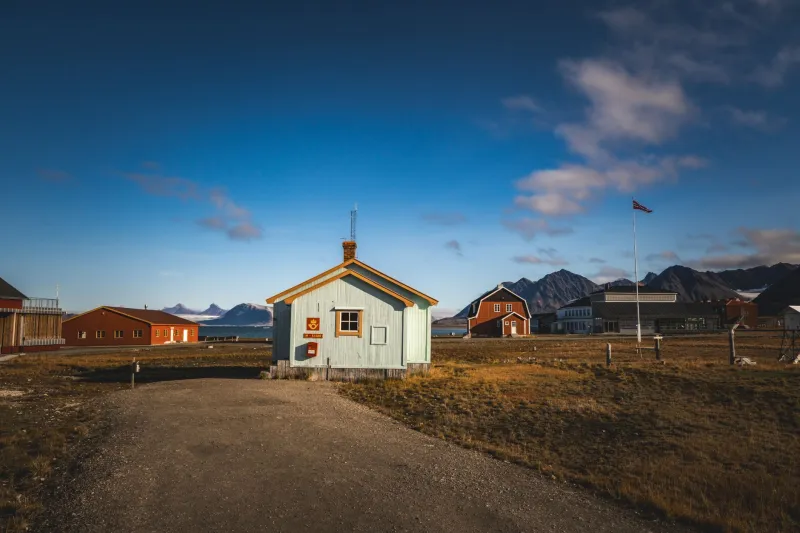
Somewhere past midnight on the Svalbard archipelago, the sun hangs at roughly the same height it occupied three hours earlier. The light is golden, unhurried, and completely indifferent to any schedule you may have brought with you from home. First-time expedition travelers frequently describe this moment with a particular phrase: I didn't know what to do with myself.
That small confession contains more psychological weight than most people initially recognize.
The Architecture of an American Day
Consider how thoroughly darkness structures daily life in the United States. Darkness signals permission to stop working. It enforces the boundary between productive hours and rest. It creates the scarcity of time that makes morning coffee feel urgent and unread emails feel threatening. Americans are, by and large, people who have organized their entire sense of productivity around the hard stop that nightfall provides.
Remove that stop entirely—as Arctic summer does with remarkable efficiency—and the internal machinery of a normal day begins to sputter. There is no external cue to wind down. Dinner feels arbitrary at 9 p.m. when the light is identical to what it was at noon. The pressure to accomplish something before it gets dark evaporates, because darkness is simply not coming.
What replaces that pressure is the subject worth examining.
Abundance as a Diagnostic Tool
Expedition leaders who guide travelers through the Norwegian High Arctic during summer months consistently observe a behavioral pattern that unfolds over the first three to four days. Initially, travelers attempt to maintain their home schedules—rising early, structuring meals at conventional times, resisting the impulse to take a midnight kayak along a fjord wall simply because the light makes it possible. They are, in effect, trying to impose scarcity onto an environment that offers none.
By day four or five, that resistance typically collapses. Not from exhaustion, but from revelation.
When the artificial deadline of darkness is removed, travelers begin making choices that are, for the first time in their adult lives, entirely preference-driven rather than time-driven. They discover whether they actually want to photograph walrus colonies at 11 p.m. or whether they genuinely prefer sitting quietly on the ship's deck, doing nothing in particular. They find out if the activities they pursue at home are things they love or simply things they do because the window for doing them is closing.
The Arctic summer, in this respect, functions less like a vacation and more like a controlled psychological experiment.
The Scarcity Mindset in Relief
Psychologists who study scarcity have long argued that the feeling of having too little of something—time, money, attention—fundamentally narrows cognitive focus. It produces a kind of tunnel vision that makes people effective at managing immediate demands while simultaneously blinding them to longer-horizon thinking. Most Americans live inside this tunnel without ever having stood outside it long enough to see its walls.
Arctic summer removes the tunnel entirely.
With no darkness approaching, the horizon of a single day stretches outward in ways that feel genuinely disorienting. Travelers on extended Arctic expeditions frequently report that their relationship with urgency shifts in ways they struggle to articulate upon returning home. Decisions that once felt pressing begin to seem, in retrospect, like responses to an artificial scarcity that the midnight sun simply dissolved.
This is not a trivial observation for Americans who spend significant professional energy optimizing their time. The revelation that much of that optimization is a response to manufactured pressure—rather than genuine necessity—can be quietly destabilizing. It is also, by most accounts, clarifying in ways that no productivity seminar has managed to replicate.
What Travelers Actually Choose
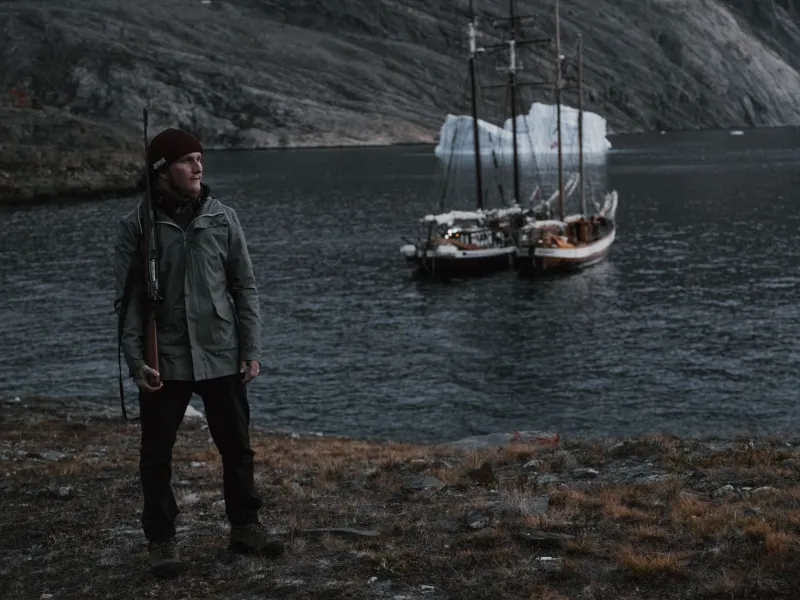
Isbjørn Adventure expeditions operating during the June and July peak of the midnight sun season offer a particular window into this phenomenon, precisely because the itinerary is structured around opportunity rather than obligation. There is no mandatory schedule to keep. Wildlife sightings—polar bears traversing sea ice, Arctic foxes moving across tundra ridgelines, beluga whales surfacing in shallow coastal waters—occur on the Arctic's timeline, not anyone else's.
What travelers do with the remaining hours tells the story.
Some find that they are, genuinely and without guilt, people who want to read for three hours in continuous golden light. Others discover a capacity for sustained observation they had no idea they possessed—watching a single glacier calve and reform over the course of an evening that never darkens. A meaningful number find themselves in extended conversation with fellow travelers in ways that feel qualitatively different from the time-bracketed interactions of ordinary life. Nobody is watching the clock. Nobody is calculating how early they need to leave to be functional tomorrow.
Tomorrow, after all, looks exactly like right now.
Planning Around the Paradox
For travelers considering an Arctic summer expedition, a few practical realities are worth understanding before departure.
Sleep requires deliberate management. Quality blackout curtains or a reliable sleep mask are not optional accessories—they are essential tools for maintaining any semblance of a recovery schedule. The body's circadian rhythms, calibrated over a lifetime to the rhythm of light and dark, do not simply adapt within the first forty-eight hours. Expect a period of genuine disorientation and plan for it rather than against it.
The window for Arctic summer expedition travel is relatively narrow. The midnight sun at its most continuous occurs from approximately late May through mid-July across Svalbard and comparable high-latitude destinations. Peak wildlife activity—including the most productive conditions for photographing nesting seabirds, polar bear family groups, and Arctic marine mammals—aligns closely with this same window, making summer one of the most logistically rewarding seasons for expedition travel despite its psychological demands.
Perhaps most importantly: arrive with fewer expectations about what you should want to do and more curiosity about what you actually choose when the choosing is entirely yours.
The Question the Sun Keeps Asking
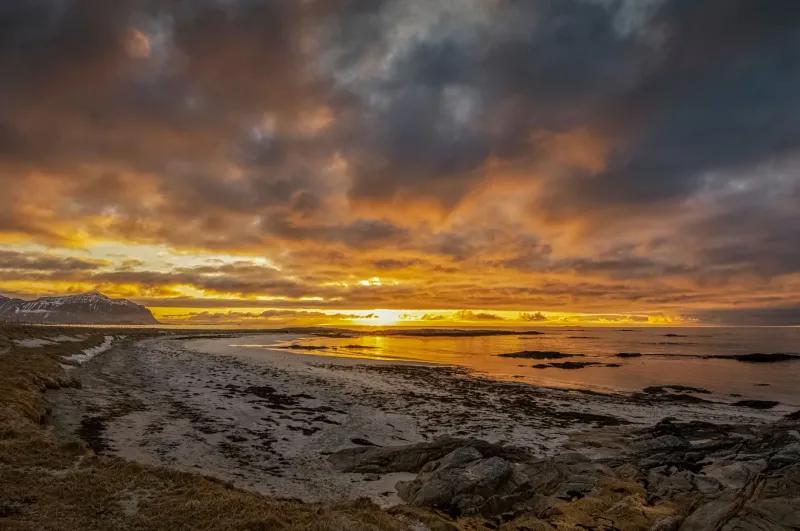
There is a particular quality to the Arctic summer light that photographers and first-time visitors alike struggle to adequately describe. It is not the harsh overhead light of a midday American summer. It is oblique, perpetually angled, and it renders the landscape in a palette of amber and rose that changes slowly enough to seem almost static yet never quite repeats itself.
To stand in that light past midnight, watching it fall across ice fields that stretch to the edge of vision, is to understand something about abundance that is genuinely difficult to access from within the structure of ordinary American life.
The midnight sun does not ask you to be productive. It does not ask you to optimize. It simply continues, and in continuing, it asks one question with remarkable persistence: Now that nothing is running out, what do you actually want?
How travelers answer that question—and what they decide to do with the answer once they return home—is, in the end, what makes an Arctic summer expedition something considerably more than a trip to see spectacular landscapes. It is an encounter with a version of yourself that scarcity has never permitted you to fully meet.