The Ones Who Read the Ice: How Indigenous Guides Are Quietly Redefining Arctic Travel
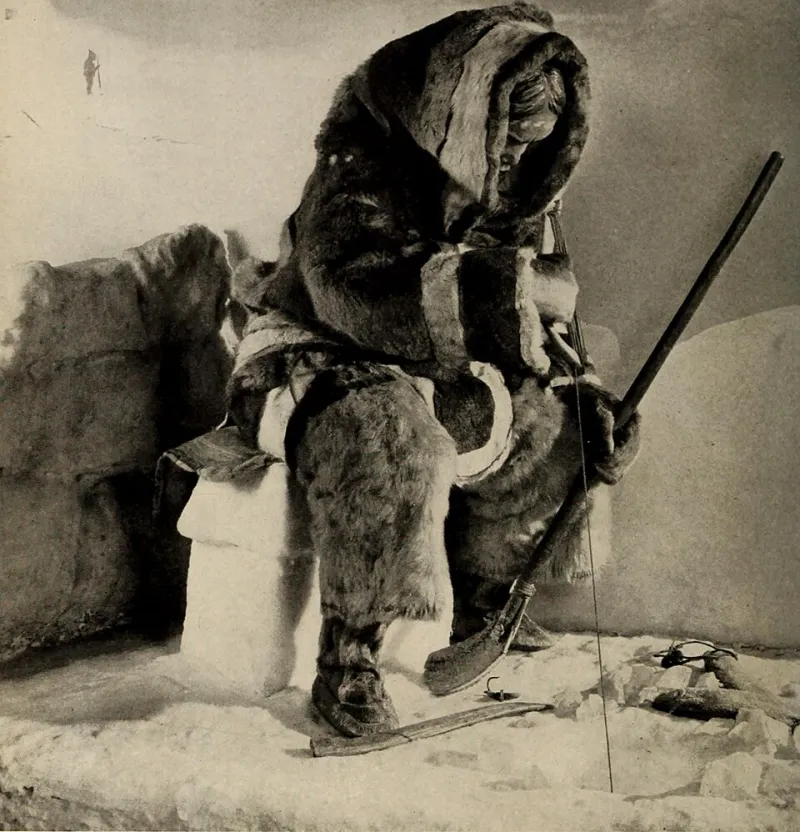
Photo: Internet Archive Book Images, Public domain, via Wikimedia Commons
The GPS said the route was clear. Ellen, a Greenlandic guide who has led spring traverses along the Disko Bay coast for more than a decade, disagreed. She had watched the wind the night before, noticed the color of the old ice where it met the shore, and heard something in the way the dogs had behaved at breakfast. The group waited a day. When they finally crossed, they passed a section where the sea ice had fractured overnight — exactly where the satellite imagery, refreshed that morning, had shown nothing.
Stories like this are not folklore. They are the working reality of a growing class of Indigenous guides across the Nordic Arctic who are reshaping what expedition tourism means — and who profits from it.
Knowledge That Doesn't Come From a Screen
Modern expedition operators carry radar, satellite ice charts, weather routing, and satellite phones. All of it matters. None of it replaces a guide who learned the fjords from a grandparent, who can read nautical blue as dangerous and gray-green as safe, who knows that a particular snow crust in April means the sled will hold but a ski will punch through.
In Sápmi, the territory spanning northern Norway, Sweden, and Finland, Sámi guides are increasingly leading reindeer-migration treks and winter cultural expeditions on their own terms — not as cultural exhibits but as outfitters, safety officers, and storytellers. In Greenland and Nunavut, Inuit hunters-turned-guides bring a depth of sea-ice judgment that certification courses cannot teach. Their knowledge is empirical, accumulated, and constantly updated in ways a model forecast is not.
For the traveler, this is not a matter of ethics alone. It is a matter of competence. The Arctic is unforgiving precisely because it changes faster than any database can record.
Three Guides, Three Landscapes
Consider the range of work now available to the US traveler:
The Sámi winter guide. Near Tromsø and Kiruna, small Sámi-owned operators lead multi-day expeditions by ski and sled, teaching travelers how to read snow layers, navigate whiteout, and understand why reindeer move the way they do. The best of these trips are less about spectacle than participation.
The Inuit ice navigator. In East and West Greenland, community-based outfitters employ guides whose families have traveled these waters by umiaq and dogsled for centuries. Their routes are chosen by weather, tide, and memory — and they will turn back without hesitation when conditions say so.
The Greenlandic settlement host. In villages of a few hundred people, locally run guesthouses and boat charters let travelers experience Arctic life directly, with revenue staying in the community rather than flowing to a headquarters in another hemisphere.
What Booking Community-Led Actually Means
The phrase "community-led" gets used loosely. Here is how a discerning American traveler can verify it:
- Check ownership. Is the outfitter registered in the country, and is it owned by residents of the region it operates in? A Sámi name on a brochure is not the same as a Sámi-owned business.
- Ask who leads. Are the guides Indigenous, or are they hired seasonal staff with a cultural consultant added for marketing?
- Follow the money. Ask what percentage of your trip cost stays local — guides, food, lodging, permits.
- Look for consent. Cultural experiences should be offered, not performed. If a visit to a settlement or ceremony feels staged for cameras, it likely is.
What We Owe the Communities That Host Us
Travelers from the United States arrive in the Arctic with purchasing power that can transform a small economy — or distort it. Pay fair rates without haggling. Ask before photographing people. Buy provisions locally where possible. Understand that a guide saying "no" or "not today" is protecting you, not disappointing you.
Most of all, arrive as a student. The most valuable thing a visitor can bring to the far north is humility before a knowledge system that kept people alive here for thousands of years before the first satellite fix. The guides rewriting Arctic tourism are not asking for applause. They are asking to be recognized as what they have always been: the region's foremost experts.