The Comfort Trap: Why Hostile Environments Unlock a Sense of Aliveness That Safety Never Can
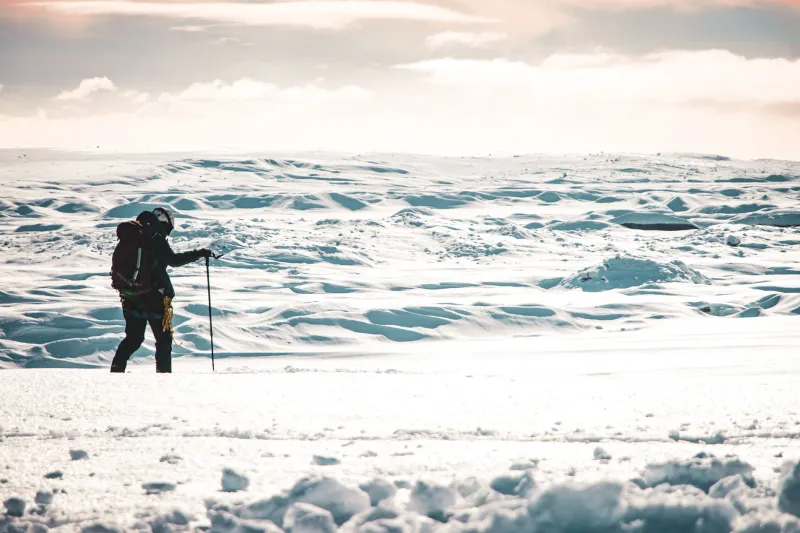
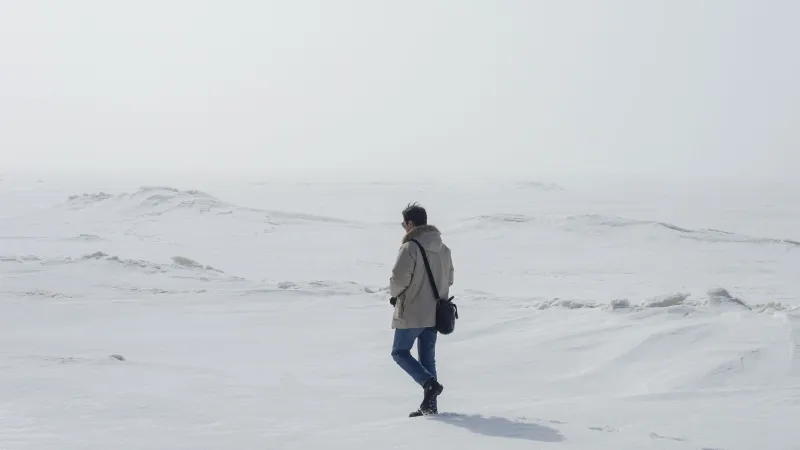
There is a particular moment that seasoned Arctic expeditioners describe with striking consistency. It arrives somewhere between the first brutal gust off the Svalbard plateau and the realization that the nearest heated building is many miles behind them. The cold is not metaphorical. The ice is not decorative. And in that moment — counterintuitively, almost embarrassingly — they feel more alive than they have in years.
This is not bravado. It is not the performance of adventure for social media. It is a neurological event, one that researchers have been quietly documenting for decades and that evolutionary biologists have been attempting to explain for even longer. The question worth asking is not why the Arctic produces this sensation. The more uncomfortable question is why ordinary American life so rarely does.
The Architecture of Modern Comfort
The United States has spent the better part of a century constructing an environment optimized for the elimination of physical hardship. Climate-controlled offices, same-day delivery, ergonomic everything, noise-canceling headphones, apps that remove friction from virtually every transaction — the infrastructure of contemporary American life is, by design, a system engineered to prevent the nervous system from ever being genuinely challenged.
This is not a moral failure. It is, in many respects, a triumph of civilization. But the human brain was not designed for this environment. It was designed for the Pleistocene — for cold, scarcity, predation, and the kind of sustained physical effort that modern life has rendered largely optional. When the threats disappear, so does something else: the acute, clarifying signal that you are, in fact, alive and functioning at full capacity.
Psychologists refer to this as the "comfort paradox" — the well-documented phenomenon in which the elimination of suffering does not produce proportional increases in wellbeing. Beyond a certain threshold of security and convenience, additional comfort yields diminishing returns on felt vitality. Some researchers argue it produces negative returns.
What Stress Hormones Actually Do
When the body encounters a genuine environmental threat — sub-zero temperatures, physical exertion in demanding terrain, the visual presence of a polar bear at a distance that commands respect — the adrenal system responds with a precise hormonal cascade. Cortisol and adrenaline flood the bloodstream. Norepinephrine sharpens attentional focus to a fine point. The prefrontal cortex, typically occupied with scheduling and self-monitoring, cedes priority to the systems responsible for immediate environmental processing.
The result is a state of perception that most Americans encounter only in crisis — and even then, rarely by choice. Every sensory channel opens. The cold becomes information rather than inconvenience. The sound of ice shifting underfoot carries meaning. The quality of light on the snow communicates something about the hour and the weather. The body, in short, begins operating as the instrument it was built to be.
Neuroscientist and author David Eagleman has written extensively about the relationship between novelty, danger, and subjective time perception. His research suggests that threatening or genuinely unfamiliar environments cause the brain to encode memory at a significantly higher density — which is why a single week in the high Arctic frequently feels, in retrospect, longer and more substantial than months of routine domestic life. The brain is paying attention. It has no choice.
Expedition Testimonies: A Pattern That Repeats
At Isbjørn Adventure, we have guided expeditioners from every professional background imaginable — surgeons, attorneys, software engineers, military veterans, retired schoolteachers. The specifics of their lives differ considerably. What they report upon returning from the polar regions does not.
A cardiologist from Chicago described her third day on the ice as "the first time in fifteen years I wasn't thinking about anything I was supposed to be thinking about." A technology executive from Austin said simply that he had forgotten what it felt like to need something. A former collegiate athlete, now in his mid-fifties, described the experience of completing a demanding snowshoe traverse in deteriorating weather as "the first honest thing I've done in a decade."
None of these individuals were seeking suffering for its own sake. What they were seeking — even if they could not articulate it before departure — was the sensation of genuine stakes. Of an environment that responded to their choices with real consequences. Of a world that did not buffer them from the results of their own decisions.
The Arctic provides this without negotiation.
Evolutionary Biology and the Mismatched Brain
Evolutionary psychologists use the term "mismatch" to describe the growing gap between the environment human biology was designed for and the environment most Americans now inhabit. Our stress-response systems evolved to handle immediate, physical, time-limited threats — the kind the Arctic delivers in abundance. They were not designed for the chronic, low-grade, unresolvable pressures of modern professional and social life.
When the body's threat-detection systems are activated by a genuine physical challenge and then successfully navigated, the neurological reward is substantial. The resolution of real danger produces a satisfaction that virtual, social, or financial threats rarely replicate. There is a completeness to it — a beginning, a demand, and an end — that the ambient anxieties of contemporary American life conspicuously lack.
This may explain why so many expeditioners describe the Arctic not as an escape from real life, but as a return to it. The hostility of the environment is not incidental to the experience. It is the experience. The cold is not something to be survived in spite of the journey. It is the reason the journey produces what it does.
Choosing Difficulty With Intention
None of this is an argument for recklessness. Polar expeditions conducted responsibly — with experienced guides, appropriate equipment, and genuine respect for the environment's capacity for indifference — are not death marches. They are calibrated encounters with the kind of difficulty the human nervous system was built to meet.
The distinction matters. What the Arctic offers is not chaos. It is consequence. It is an environment in which effort is legible, conditions are honest, and the feedback between action and outcome is immediate and clear. For many Americans accustomed to systems that absorb and defer consequences almost indefinitely, this directness is itself a revelation.
First-time expeditioners frequently report a version of the same surprise: that the harshest moments of the journey were also, somehow, the most peaceful. Not because the cold was pleasant, but because the cold was real — and reality, it turns out, is something the American psyche has been quietly starving for.
The Arctic does not care about your comfort. That, paradoxically, may be precisely why it makes you feel so completely, unmistakably alive.