What Polar Bears Actually Teach Us About Thriving Under Pressure
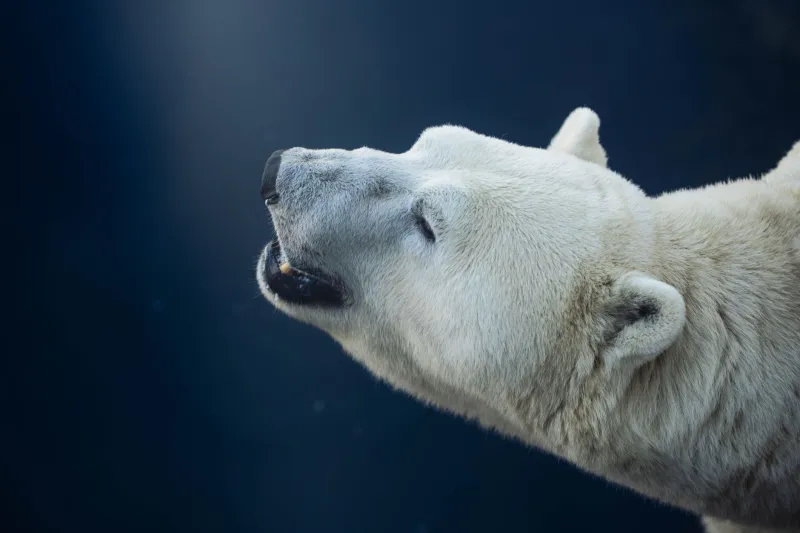
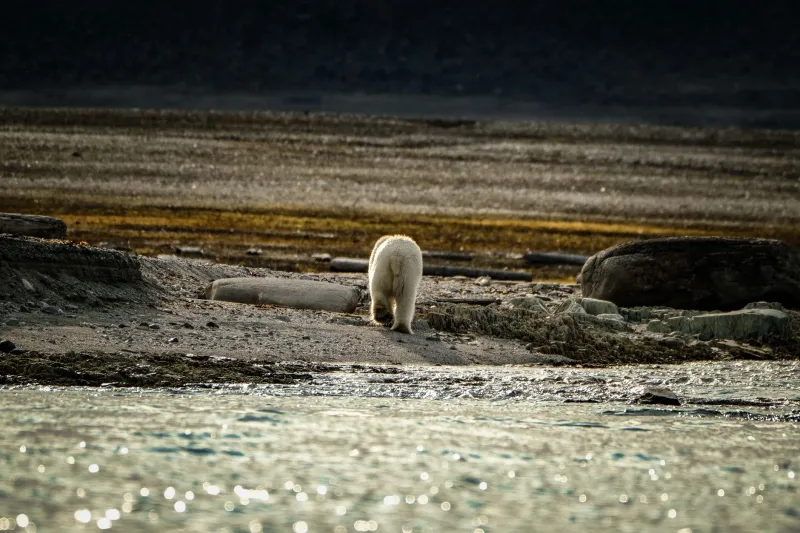
There is a moment that nearly every guest aboard an Isbjørn Adventure expedition describes in similar terms. The Zodiac has drifted to within respectful distance of the ice edge. A polar bear — large, unhurried, and entirely indifferent to your presence — is doing something that looks, at first glance, like nothing at all. It is simply waiting. And yet, within that stillness, experienced naturalists will tell you, an extraordinary intelligence is at work.
For American professionals accustomed to measuring productivity in outputs per hour, that image can be quietly destabilizing. It invites a question that the bear itself seems to pose without effort: what if everything you have been taught about resilience is wrong?
The Mythology of Relentless Hustle
In the United States, resilience has been largely repackaged as grit — the capacity to push harder, recover faster, and return to peak performance with minimal downtime. It is a narrative that suits a productivity-obsessed culture. Corporate keynote speakers celebrate it. Business schools teach frameworks built around it. Wellness apps monetize it.
Polar bears, however, did not receive that memo.
Ursus maritimus has survived for roughly 150,000 years across one of the most inhospitable environments on the planet. It has outlasted ice ages, navigated catastrophic food scarcity, and adapted to conditions that would end a lesser species within generations. And it has done so not through relentless exertion, but through a behavioral repertoire that prioritizes strategic inaction as aggressively as it prioritizes action.
Biologists studying polar bear energetics have documented that adult bears in the wild spend a significant portion of their active season in a state researchers sometimes call "still hunting" — a motionless vigil at seal breathing holes that can extend for hours. From the outside, it resembles passivity. From a metabolic and cognitive standpoint, it is anything but.
Patience as a Performance Strategy
Dr. Ian Stirling, one of the foremost polar bear researchers in the world, has written extensively about the extraordinary sensory focus bears maintain during still hunting. The animal is not resting. It is sustaining a concentrated state of readiness over a prolonged period — regulating its own arousal, suppressing the impulse to move, and conserving energy while remaining entirely capable of explosive action the moment circumstances demand it.
For expedition guests who observe this behavior firsthand through a spotting scope on a Svalbard shoreline, the effect is often described as humbling. One American executive who traveled with Isbjørn Adventure on a High Arctic summer voyage put it plainly: "I realized I had never once in my career waited for anything. I had always equated waiting with losing ground. Watching that bear, I understood for the first time that waiting can be the most sophisticated thing you do."
This is not a metaphor layered onto animal behavior after the fact. Behavioral ecologists have consistently found that bears who hunt with greater patience achieve higher caloric returns per hunt than those who abandon vigils prematurely. The data supports what the ice has always known: strategic stillness is a competitive advantage.
Adaptation Without Panic
Beyond patience, polar bears demonstrate a second principle that challenges conventional resilience models — the capacity to adapt without the behavioral signature of panic.
As sea ice conditions shift seasonally and, increasingly, year to year, individual bears adjust their foraging strategies with a flexibility that researchers continue to study closely. Some populations have incorporated terrestrial food sources. Others have altered their movement corridors in response to changing ice distribution. These adaptations are not uniform across individuals, which suggests a degree of behavioral innovation that operates at the level of the individual animal.
What strikes expedition naturalists is not merely that the adaptation occurs, but the manner in which it occurs. There is no observable analog to what humans might call crisis behavior. The bear does not appear to catastrophize. It reads the environment, recalibrates, and proceeds.
For American travelers who arrive in the Arctic carrying the accumulated stress of careers defined by quarterly targets and constant disruption, watching this process unfold in real time can function as a kind of recalibration of their own. The bear is not optimistic. It is not stoic in any philosophical sense. It is simply, and completely, present to the conditions in front of it.
The Body as Instrument
Polar bears also offer a third lesson that proves particularly resonant for guests who spend their professional lives largely estranged from physical sensation: they treat their bodies as primary instruments of intelligence rather than vehicles for the mind.
A polar bear navigates sea ice using a combination of scent, sound, pressure sensitivity through its paws, and visual cues that no human observer can fully appreciate from a distance. Its decisions — where to walk, where to stop, when to retreat from ice that appears solid but is structurally compromised — emerge from a continuous, full-body reading of the environment.
Expedition guides at Isbjørn Adventure frequently note that guests who spend extended time observing bears in the field begin, almost involuntarily, to pay closer attention to their own physical experience of the environment. The cold becomes information rather than discomfort. The sound of ice shifting underfoot carries meaning. The body, long subordinated to the demands of screen-mediated work, reasserts itself as a source of data.
This is not incidental to the expedition experience. It is, in many respects, the experience.
What the Ice Confirms
The Arctic does not offer comfort in the conventional sense. It offers clarity. And for those willing to sit with that clarity — aboard a vessel anchored in a remote fjord, watching a polar bear move across a landscape that feels genuinely beyond the edge of the known world — the lessons that emerge tend to be durable in ways that conference-room resilience training rarely achieves.
The bear does not perform resilience for an audience. It does not have a framework or a five-step model. It has ice, and hunger, and an evolutionary inheritance refined across millennia, and it works with what it has — with a patience and precision that, once witnessed, is difficult to unsee.
Isbjørn Adventure designs its High Arctic expeditions to place guests in proximity to exactly these moments — not as passive observers, but as participants in an environment that demands genuine engagement. The polar bear, in this sense, is not merely a wildlife sighting. It is, as more than a few guests have described it upon returning home, the most effective leadership development experience they have ever had.
They simply did not expect it to have four legs and weigh eight hundred pounds.