Closer From a Distance: How Polar Expeditions Unexpectedly Deepen the Bonds Left Behind

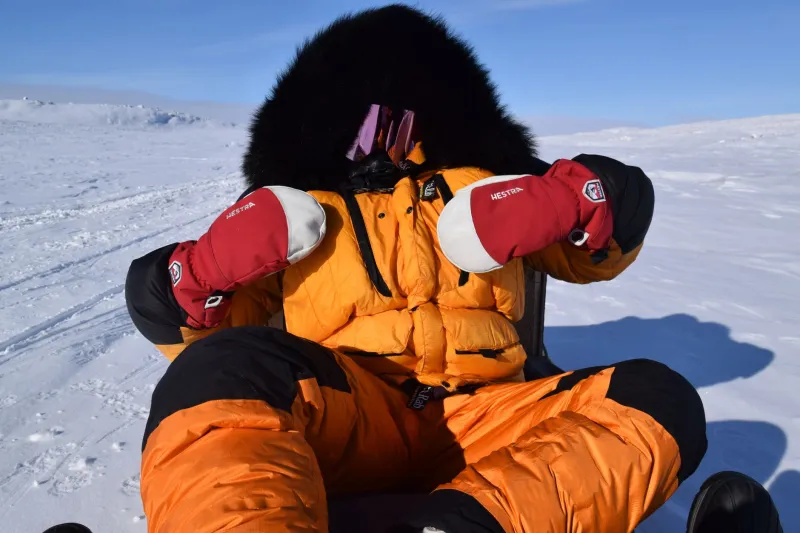
Photo by Photo by Sergio Pérez Mateo on Unsplash on Unsplash
There is a particular moment that veteran Arctic guides at Isbjørn Adventure have observed so frequently it has become almost predictable. It arrives somewhere around the third or fourth day at sea, when the last cellular signal has dissolved into the Barents Sea and the expedition vessel is surrounded by nothing but open water, ice floes, and the occasional fulmar riding the wind. The expeditioner grows quiet. Not the polite quiet of a person waiting for something to happen, but the settled quiet of someone who has just set down a very heavy bag they did not realize they were carrying.
That bag, more often than not, is distraction. And what emerges when distraction is removed—reliably, almost universally—is thought of the people at home.
The Counterintuitive Logic of Polar Absence
American culture tends to frame closeness in terms of proximity. We measure love in presence: attendance at school plays, shared dinners, weekend rituals. The idea that traveling to one of the most remote environments on Earth might strengthen rather than strain a marriage or a parent-child relationship runs against this intuition entirely.
And yet the evidence, both anecdotal and increasingly empirical, suggests exactly that.
Researchers studying the psychological effects of extended wilderness immersion have documented what some call a "relational clarification" effect. When individuals are removed from the ambient noise of daily domestic life—the scheduling conflicts, the half-heard conversations, the low-grade friction of shared household logistics—they tend to access a cleaner emotional signal. What they actually feel about their partners and children, stripped of the static, is frequently warmer and more vivid than what they experience during ordinary life.
Dr. Reed Larson and colleagues at the University of Illinois have spent years examining the relationship between solitude, nature immersion, and emotional processing. Their findings suggest that extended time in natural environments fosters what psychologists call "self-distancing"—the capacity to view one's own life with a degree of reflective separation. For returning expeditioners, this often manifests as a sharpened appreciation for relationships that daily familiarity had rendered invisible.
What the Ice Strips Away
To understand why the Arctic specifically produces this effect, it helps to consider what it removes.
A standard Isbjørn Adventure expedition runs between eight and fourteen days. During that window, participants have no access to social media, no work email, no news cycle, and no ability to conduct the thousand small digital transactions that structure modern American life. There are no streaming queues to manage, no group texts to monitor, no Amazon deliveries to track.
What remains is the expedition itself: the wildlife, the landscape, the shipboard community, and the interior life of the traveler.
In that interior life, family tends to surface with unexpected force. Expeditioners routinely report spending long hours on deck, watching pack ice drift past, and finding their minds returning again and again to specific, vivid memories of their spouses or children—memories that had been, in some sense, buried beneath the sediment of routine. A daughter's laugh. The particular way a partner reaches for their hand. The smell of a family home.
These are not new memories. They are old ones, recovered.
The Role of Perceived Risk
Polar travel is not dangerous in the reckless sense. Reputable expedition operators maintain rigorous safety protocols, and modern polar vessels are engineered for these environments. But the Arctic is genuinely demanding, and expeditioners are aware, at some level, that they are operating at a remove from ordinary safety nets.
This mild but persistent sense of exposure has a well-documented psychological effect: it activates what researchers call "mortality salience," a heightened awareness of life's finite quality. Studies in terror management theory suggest that when people are reminded of their own vulnerability, they instinctively reorient toward what they value most. For the majority of American adults, that means family.
Guides frequently report that expeditioners become noticeably more communicative about their loved ones as the journey progresses. They share photographs during meals, tell stories about their children, speak about their partners with a warmth that suggests genuine rediscovery rather than mere conversation.
Letters Written and Never Sent
One of the more striking practices that has emerged organically among Isbjørn Adventure expeditioners is the habit of journaling—specifically, of writing letters to family members that cannot be delivered until the ship returns to port.
Because communication is impossible, the writing carries no performative weight. There is no audience, no response expected, no subtext of reassurance or conflict management. Expeditioners write, in many cases, with a candor they rarely access in daily life. Several have described these letters as among the most honest expressions of feeling they have ever committed to paper.
The act of writing, researchers in expressive therapy suggest, consolidates and deepens emotion rather than merely recording it. By the time expeditioners return home and deliver these letters—or simply carry the sentiments back in person—the feelings they express have been reinforced through the act of articulation.
The result, reported by a striking proportion of returning travelers, is a homecoming that feels qualitatively different from any they have experienced before.
Perspective as a Renewable Resource
There is a concept in relationship psychology sometimes called "positive illusions"—the tendency of people in healthy relationships to view their partners in a slightly more favorable light than objective evidence might strictly support. Research by Sandra Murray at the University at Buffalo suggests that these positive illusions are not delusions but rather functional perspectives that sustain long-term commitment.
What the Arctic appears to do, for many expeditioners, is restore positive illusions that the grind of daily life has eroded. When a person has spent a week watching polar bears move across sea ice, has witnessed the sun circle the horizon without setting, has felt the particular silence of a fjord in the early morning, they return home with a recalibrated sense of scale. The frustrations that loomed large before departure—the disagreements about household responsibilities, the accumulated small grievances of cohabitation—tend to diminish against the backdrop of what they have witnessed.
This is not escapism. It is perspective, which is among the most practical tools a relationship can possess.
Planning an Expedition With Your Relationships in Mind
For Americans considering an Arctic expedition who carry some ambivalence about the time away from family, it is worth reframing the calculus entirely. The weeks spent aboard a polar vessel are not weeks subtracted from your relationships. They may, in the accounting that matters, represent weeks invested in them.
That said, intentional preparation amplifies the effect. Before departure, many experienced expeditioners recommend establishing a deliberate ritual of presence with family: a shared meal, a meaningful conversation, a specific memory created together. This gives the mind something concrete to return to during the long, quiet hours on the ice.
Bringing a dedicated journal, separate from any travel log, reserved for letters and reflections addressed to loved ones, is a practice that Isbjørn Adventure guides have seen yield remarkable results for returning expeditioners.
And upon return, resisting the urge to immediately re-submerge in digital life—giving yourself and your family a day or two of the same intentional presence you practiced in the Arctic—allows the perspective you have earned to land rather than evaporate.
The ice gives many things back. Among the least expected, and perhaps the most valuable, is the people you already had.