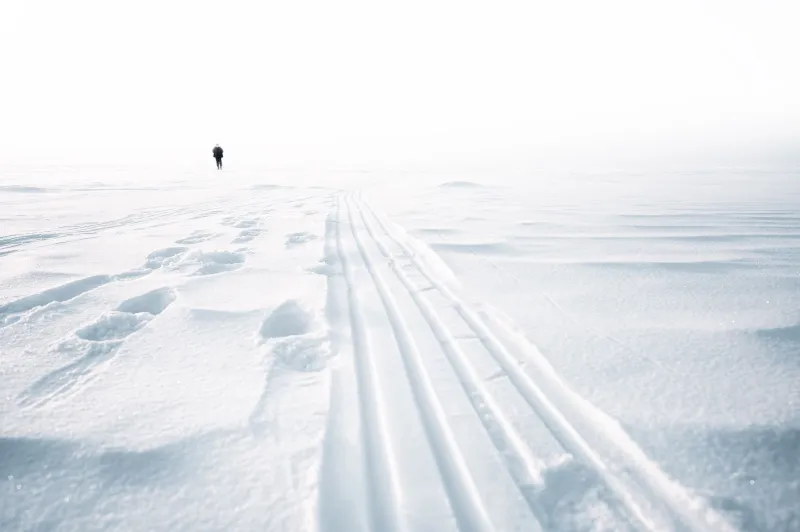
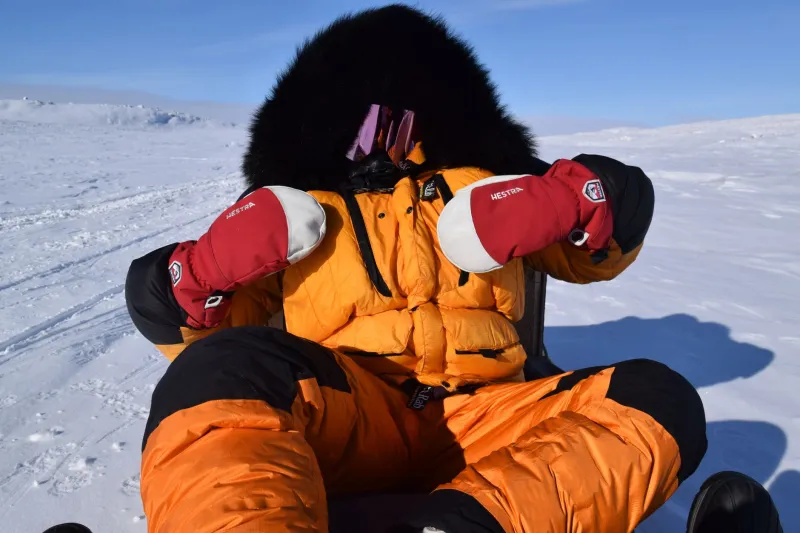
Drawn to the Edge: The Psychology of Why Extreme Arctic Conditions Make Americans Feel Most Human
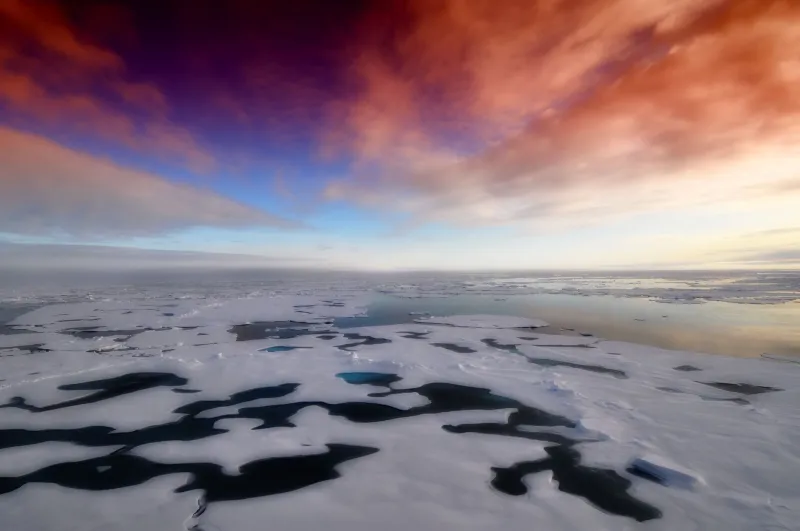
There is a particular moment that veteran Arctic guides describe with near-universal consistency. It arrives somewhere between the first serious weather event and the realization that no amount of professional status or domestic comfort can negotiate with a polar storm. The traveler — often a high-achieving American accustomed to controlling nearly every variable in their life — goes very still. And then, paradoxically, something in them relaxes.
This is the phenomenon that psychologists, expedition operators, and returning travelers are increasingly struggling to articulate: the strange, counterintuitive sense of aliveness that emerges precisely when conditions become genuinely dangerous. It is not thrill-seeking in the conventional sense. It is something older, more structural, and considerably more difficult to explain over dinner back home.
The Sanitized American Baseline
To understand why the Arctic produces this response, it helps to examine what most Americans are leaving behind.
The average professional life in the United States is, by historical standards, extraordinarily insulated from physical consequence. Climate control manages temperature. Insurance manages risk. Algorithms manage uncertainty. The body, for many, has become largely decorative — transported, fed, and rested, but rarely tested in ways that carry genuine stakes.
Dr. Mara Lindqvist, a behavioral psychologist who has consulted with several high-latitude expedition operators, describes this condition as "consequence atrophy" — a gradual dulling of the nervous system's capacity to register real-world feedback. "When nothing you do has an immediate physical consequence," she explains, "the brain begins to lose its ability to accurately assess what matters. People feel numb without being able to name why."
The Arctic, she notes, is essentially the antidote to consequence atrophy. Every decision carries weight. Every layer of clothing, every step on uncertain sea ice, every read of shifting weather has a downstream effect that the body registers immediately and honestly.
What Risk Actually Provides
The psychological literature on voluntary risk-seeking behavior has long distinguished between what researchers call "sensation seeking" — the pursuit of novelty and intensity for its own sake — and something more purposeful: the deliberate exposure to conditions that demand full presence.
Expedition travelers who return from the high Arctic consistently describe the latter. They are not, by and large, adrenaline chasers. Many are in their forties and fifties. A significant number describe themselves as having felt, before their first polar journey, a vague but persistent sense that something essential was missing from their lives — without being able to identify what.
"I kept achieving things and feeling less," said one traveler who completed an expedition to Svalbard with Isbjørn Adventure in the previous season. A corporate attorney from Chicago, she had spent two decades building a career of considerable distinction. "The Arctic was the first place in years where I wasn't performing. I was just operating. There's an enormous difference."
This distinction — between performance and operation — surfaces repeatedly in conversations with returning polar travelers. Performance, as they describe it, is behavior calibrated for external observation. Operation is behavior calibrated for survival. The Arctic, which has no interest in anyone's professional reputation, strips the former away entirely.
The Role of Genuine Consequence
What separates Arctic expedition travel from other forms of adventure tourism is the authenticity of its stakes. A difficult hike in a national park carries discomfort. A polar crossing carries genuine existential exposure. The distinction is not a marketing claim — it is a physiological and psychological reality that the body recognizes immediately.
Neuroscientists studying high-stress environments have documented what happens when the human nervous system encounters conditions that could plausibly end in serious harm. Attention sharpens to a degree that ordinary life rarely produces. Sensory perception intensifies. The internal monologue — that constant, exhausting narration of modern self-consciousness — goes quiet.
"People talk about mindfulness as though it requires practice and discipline," says Dr. Lindqvist. "The Arctic produces it involuntarily. You cannot be anywhere other than where you are. The environment simply will not permit it."
This forced presence, travelers report, is not experienced as terror. It is experienced as relief.
Who Is Actually Going — and Why
The demographic profile of Americans seeking polar expedition experiences has shifted meaningfully over the past decade. While early Arctic tourism skewed toward retired adventurers with flexible schedules and accumulated savings, the current traveler profile increasingly includes professionals in their late thirties through mid-fifties — people at the height of their careers and, often, at the height of their dissatisfaction.
Many describe a specific triggering condition: the achievement of a long-pursued goal followed by an unexpected emotional flatness. The promotion arrived. The business sold. The children left for college. And in the space that opened up, a question surfaced that comfort could not answer.
Isbjørn Adventure's expedition guides have observed this pattern consistently enough that they have come to anticipate it. "The people who arrive most skeptical that the environment will affect them," notes one senior guide with more than a decade of high-latitude experience, "are usually the ones most profoundly changed by it. They've built very effective defenses against feeling things. The Arctic simply isn't interested in those defenses."
The Return Problem
Perhaps the most revealing aspect of this psychological phenomenon is what happens when travelers come home. The Arctic clarity — that sharp, consequence-laden aliveness — does not always survive re-entry into climate-controlled offices and optimized routines.
Many returning travelers describe a transitional period of acute dissatisfaction with ordinary life, not because ordinary life has worsened, but because their capacity to feel its texture has temporarily increased. They notice, more precisely than before, what is hollow and what is not. This is experienced as uncomfortable, occasionally destabilizing, and — almost universally — as valuable.
"I came back and couldn't tolerate certain meetings anymore," said the Chicago attorney. "Not because I became difficult, but because I could finally tell the difference between a conversation that mattered and one that was theater. That felt like information worth having."
Dr. Lindqvist frames this re-entry phenomenon as the actual return on investment of polar travel. "The wilderness experience itself is significant," she says. "But the lasting value is in what it recalibrates. People come back with a clearer sense of what they're willing to spend their finite time on. That clarity is genuinely rare, and most people have no other reliable way to access it."
The Paradox, Examined
The polar paradox — that environments designed, in every meteorological sense, to end human life produce the most vivid experiences of being alive — resolves itself when examined through this psychological lens. It is not that danger is pleasurable. It is that full engagement is pleasurable, and danger is one of the few remaining reliable mechanisms for producing it in lives that have been carefully engineered to eliminate all other forms of friction.
For Americans operating within systems that prize efficiency, optimization, and risk mitigation, the Arctic offers something that cannot be replicated by any domestic experience: an environment that is completely indifferent to human preferences and entirely honest about human limits.
That honesty, it turns out, is what many people have been looking for all along.
Isbjørn Adventure offers guided polar expeditions across the high Arctic, with departure packages designed for first-time and returning expedition travelers. Contact our team to discuss the itinerary and preparation requirements appropriate for your experience level.