The Reckoning on the Ice: What Happens When Your Life Goals Stop Making Sense at 80° North
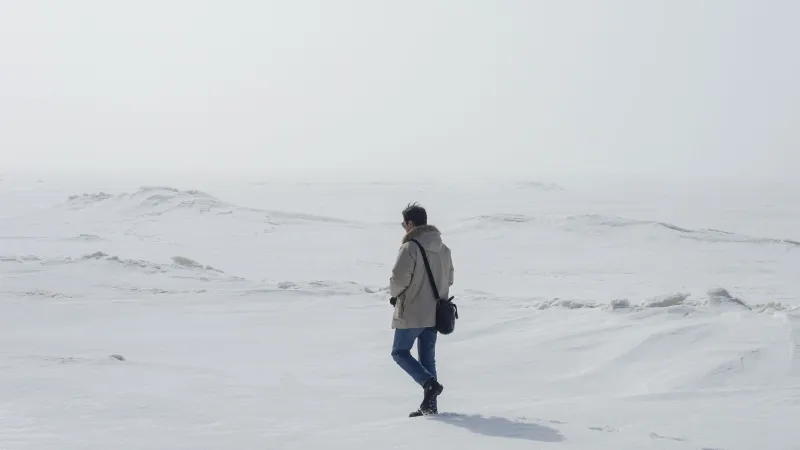
There is a particular kind of silence that settles over an expedition vessel in the small hours of an Arctic morning. The engine hums beneath your feet, pack ice drifts past the porthole, and somewhere in that stillness, a question surfaces that no amount of pre-trip research ever warned you about: Why exactly am I doing any of this?
Not the expedition. The rest of it. The career ladder. The mortgage refinancing. The performance review you were anxious about three weeks ago. The social calendar that felt, before departure, like an obligation you couldn't possibly escape.
For a significant number of travelers on extended Arctic expeditions—particularly those running ten days or longer—this moment is not metaphorical. It arrives with the blunt specificity of a physical sensation, and it rarely feels like enlightenment. More often, it feels like vertigo.
The Compressed Timeline of Polar Disorientation
Expedition guides and polar psychologists have observed a rough pattern in how travelers respond to sustained immersion in remote Arctic environments. The first several days are typically consumed by logistics, wonder, and the sheer novelty of the landscape. Icebergs command full attention. Wildlife sightings produce uncomplicated joy. The cold demands a kind of focused presence that leaves little cognitive bandwidth for existential reflection.
By the end of the first week, the environment begins to feel less foreign. The body has adjusted, the rhythms of shipboard life have taken hold, and the mind—no longer occupied with managing novelty—begins to move into quieter territory.
It is in this second phase, typically between days ten and fourteen, that the dissonance tends to peak. The Arctic does not manufacture this feeling artificially. It simply removes, with considerable efficiency, the noise that ordinarily prevents it from surfacing.
What travelers are left with is something closer to unmediated self-assessment than most people encounter in ordinary life. And unmediated self-assessment, it turns out, is not always comfortable.
What the Ice Actually Reveals
The specific content of these realizations varies from traveler to traveler, but certain themes recur with enough consistency to be worth examining honestly.
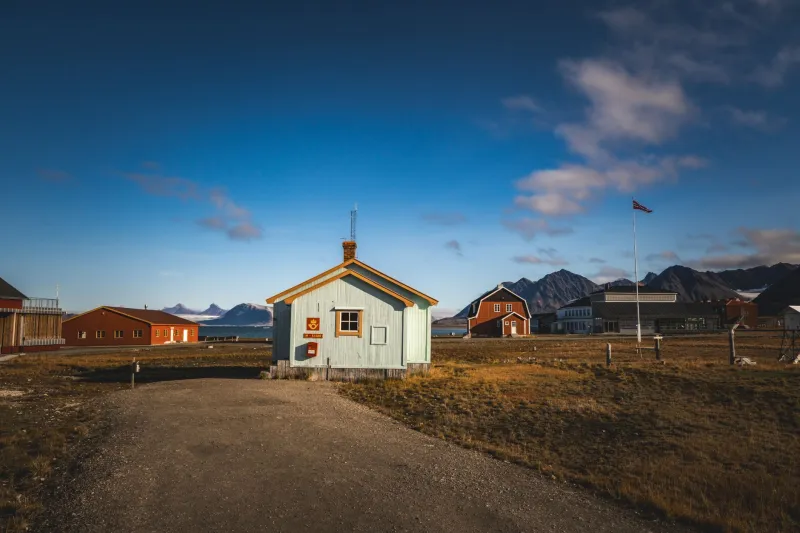
Professional ambitions that felt urgent and meaningful in a metropolitan context frequently appear, against the backdrop of the Svalbard archipelago or the Franz Josef Land coast, to be primarily about status rather than satisfaction. This is not a novel observation—philosophers and therapists have made it for centuries—but there is something about physical distance from the systems that generate status anxiety that makes the observation feel newly credible.
Relationships, too, come under a kind of involuntary audit. Travelers frequently report a clarifying awareness of which connections in their lives feel genuinely sustaining and which have been maintained largely out of habit, obligation, or social inertia.
None of this is comfortable. The Arctic does not offer the warm reassurance of a wellness retreat. It offers cold air, radical honesty, and very few places to hide.
The Problem Nobody Discusses Before Departure
Travel writing about polar expeditions tends to frame these moments as transformative breakthroughs—the point at which the traveler sheds false priorities and emerges clarified. This framing, while not entirely inaccurate, omits the more difficult portion of the experience: what happens when you go home.
The clarity achieved on the ice does not transfer automatically. It arrives as a set of perceptions that must then be reconciled with an existing life—a life that includes people who did not have the same experience, institutions that have not rearranged themselves in your absence, and financial realities that the Arctic did not pause while you were away.
Returning travelers sometimes describe a period of weeks or months during which the gap between what they understood on the expedition and what their daily life reflects feels almost painful. They return to meetings that feel hollow, to conversations that feel shallow, and to a version of themselves that the ice made them reluctant to inhabit again.
For some, this friction generates productive change. Career shifts, relocated priorities, and renegotiated relationships are not uncommon outcomes among serious expedition travelers. For others, the dissonance fades as daily life reasserts its familiar gravity, leaving behind a residue of mild dissatisfaction that is difficult to articulate.
For a smaller number, the gap creates genuine strain—in marriages, in professional relationships, in friendships with people who understandably find it difficult to engage with a perspective they have no reference point to understand.
Navigating the Return: What Actually Helps
Travelers who report the most constructive integration of their polar experiences tend to share a few common approaches.
First, they resist the impulse to make immediate sweeping decisions. The clarity felt on the ice is real, but it is also context-dependent. Acting on it before allowing it to be tested against the full complexity of an actual life tends to produce results that are less considered than they feel in the moment.
Second, they find at least one person—a partner, a close friend, a therapist—who is willing to engage seriously with what the experience produced, rather than treating it as an interesting travel anecdote. The reintegration process is genuinely aided by articulation, and articulation requires an interlocutor willing to take the conversation at its actual weight.
Third, and perhaps most practically, they identify two or three specific, concrete changes that the expedition clarified—rather than attempting to restructure everything at once. The Arctic may have illuminated the entire landscape of a life, but meaningful change tends to happen incrementally.
A Note on Expectations
Isbjørn Adventure designs its expedition programs with the full arc of the experience in mind—including the portions that do not appear in the highlight reel. Pre-departure briefings address not only gear and safety protocols but the psychological terrain of extended polar immersion, and post-expedition resources are available to travelers who find the return transition more challenging than anticipated.
This is not a warning against going. It is, rather, an invitation to go with appropriate preparation.
The Arctic will not tell you what to want. It will, with considerable force and clarity, help you see what you already want and have perhaps been too distracted to acknowledge. What you do with that information is entirely your own affair.
But it is worth knowing, before you depart, that the expedition does not end when the ship returns to port. In many respects, that is precisely when it begins.