Wired for Cold: The Biology and Psychology Behind Polar Vitality
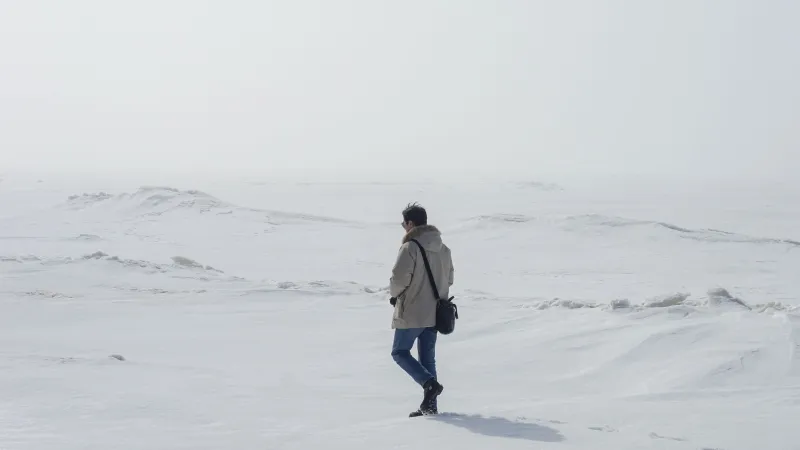
There is a particular moment that nearly every first-time Arctic expeditioner describes in nearly identical terms. It arrives within the first hour on the ice — sometimes sooner. The wind cuts across exposed skin, the cold presses in from every direction, and somewhere beneath the instinct to retreat, something else surfaces entirely: a fierce, almost euphoric awareness that one is unmistakably, undeniably alive.
This is not coincidence. It is biology.
For the millions of Americans who spend their days moving between heated offices, temperature-regulated vehicles, and climate-controlled homes, the Arctic represents something their nervous systems have not encountered in decades — perhaps ever. Understanding why extreme cold produces such a powerful sense of vitality requires a brief tour through human physiology, evolutionary history, and the psychology of what happens when the modern comfort bubble finally bursts.
The Thermoregulatory Awakening
The human body is, at its core, a thermal management system. Every organ, every biochemical process, every neural pathway operates within a narrow temperature band, and the body works continuously — and largely invisibly — to maintain it. In a world of central heating and insulated clothing, that effort is minimal. The system runs on autopilot.
Introduce genuine Arctic cold, and the autopilot disengages.
Within minutes of meaningful cold exposure, the body initiates a cascade of responses. Blood vessels near the skin constrict, redirecting circulation toward vital organs. Brown adipose tissue — a type of fat that generates heat through a process called thermogenesis — activates. Adrenaline surges. The heart rate shifts. Breathing deepens and becomes more deliberate.
From a purely physiological standpoint, the body has been asked to do something it was designed to do but rarely gets the opportunity to perform. The result is not distress — not at manageable exposure levels — but rather a full-system engagement that most Americans simply never experience in daily life. Organs that have been coasting begin to work. The sensation is often described as waking up, because in a meaningful sense, that is precisely what is happening.
Heightened Senses and the Clarity Effect
One of the most commonly reported experiences among Arctic travelers is an acute sharpening of sensory perception. Colors appear more vivid. Sounds — the crack of sea ice, the distant exhalation of a surfacing whale, the crunch of snow underfoot — register with unusual precision. Even the sense of smell, often dulled in urban environments saturated with competing stimuli, becomes notably more acute in the clean polar air.
This is not imagination. Cold environments trigger the release of norepinephrine, a neurotransmitter that plays a central role in attention and focus. Research into cold exposure has demonstrated measurable increases in norepinephrine concentration — in some studies, increases of 300 percent or more following cold immersion. The brain, flooded with this chemical signal, shifts into a state of heightened alertness that is difficult to achieve through conventional means.
For Americans accustomed to reaching for caffeine, screens, or structured productivity systems to approximate this state, the Arctic offers it freely, immediately, and without side effects. The clarity is not manufactured. It arrives as a direct consequence of where you are standing.
What Evolutionary Biology Has to Say
Humans did not evolve in climate-controlled apartments. For the overwhelming majority of our species' history, exposure to cold, wind, and environmental unpredictability was not an adventure — it was simply Tuesday. The physiological machinery that responds so dramatically to Arctic conditions was not built for novelty. It was built for necessity.
What modern Americans experience in the Arctic, then, may be less a reaction to something foreign and more a reunion with something ancestral. Evolutionary psychologists have long noted that environments demanding genuine physical engagement — those that require the body to respond, adapt, and perform — tend to produce stronger feelings of presence and meaning than passive or controlled settings. The Arctic, with its absolute indifference to human preference, qualifies as one of the most demanding environments on the planet.
There is a school of thought that suggests the pervasive sense of restlessness and low-grade dissatisfaction that characterizes so much of contemporary American life is, at least in part, the product of a mismatch between the environments we inhabit and the environments our nervous systems were shaped to navigate. The Arctic does not resolve that mismatch permanently. But for the duration of an expedition, it closes the gap in a way that is visceral and immediate.
The Role of Risk Perception
It would be incomplete to discuss Arctic vitality without acknowledging the role of perceived risk. The polar environment is genuinely consequential. Decisions about footing, exposure time, and distance from shelter carry real weight. This is not manufactured danger — it is the authentic variety, carefully managed by experienced guides but never entirely absent.
Psychologists who study optimal experience have identified what researcher Mihaly Csikszentmihalyi famously termed "flow" — a state of complete absorption in a challenging task that produces some of the highest reported levels of satisfaction and engagement in human subjects. Flow requires a meaningful match between the difficulty of a situation and the individual's capacity to respond to it. Too little challenge produces boredom. Too much produces paralysis. The managed wilderness of an Arctic expedition, where challenges are real but not insurmountable, creates conditions exceptionally well-suited to this state.
Guests on Isbjørn Adventure expeditions frequently describe moments — navigating a zodiac through pack ice, approaching a polar bear from a careful distance, crossing a tidal glacier on foot — in which time seems to compress and peripheral concerns dissolve entirely. This is not a marketing claim. It is a well-documented psychological phenomenon that polar environments are unusually effective at producing.
Why Conventional Wellness Falls Short
The American wellness industry generates hundreds of billions of dollars annually selling approximations of what the Arctic delivers directly. Cold plunge tubs attempt to replicate thermoregulatory activation. Sensory deprivation tanks approximate polar quiet. Mindfulness retreats pursue the focused presence that genuine wilderness imposes by default.
None of these are without value. But they are simulations, and the human nervous system is remarkably good at recognizing the difference. The Arctic is not a controlled environment designed to produce a specific effect. It is an indifferent, ancient, and staggeringly beautiful landscape that produces its effects as a byproduct of simply existing. That authenticity — the absence of artifice — may be precisely what makes the experience so difficult to replicate and so resistant to fading from memory.
Planning Your First Polar Expedition
For Americans considering an Arctic expedition with Isbjørn Adventure, it is worth approaching the experience with an understanding of what the body and mind are likely to encounter. The first day on the ice tends to be characterized by overwhelming sensory input — a kind of productive overload as systems that have been underutilized begin firing in earnest. By the second and third days, most guests report settling into a state of calm alertness that feels qualitatively different from anything they have experienced at home.
Dress in well-fitted, layered technical outerwear. Follow guide instructions on cold exposure duration, particularly in wind. Stay hydrated — cold air is dry, and dehydration accelerates fatigue. And above all, resist the impulse to document every moment before you have allowed yourself to simply inhabit it.
The Arctic will ask things of you that your daily life does not. In return, it will offer something your daily life cannot. That exchange is, for most who make it, one of the more consequential transactions of their lives.