Sharpened by the Cold: The Science of How Arctic Temperatures Amplify Human Perception
There is a moment, familiar to nearly every traveler who has stepped onto Arctic ice for the first time, that is difficult to articulate upon returning home. Colors appear more saturated than memory can account for. Sounds—the creak of a glacier, the exhalation of a surfacing whale—arrive with a precision that feels almost surgical. The air itself seems to carry information. Most visitors initially attribute this to novelty or awe. The science, however, tells a considerably more specific story.
The extreme cold of the high Arctic does not merely challenge the human body. In measurable, documentable ways, it reconfigures how that body receives and processes the world around it.
The Survival Architecture Behind Heightened Awareness
When core body temperature begins to drop, the human nervous system initiates a well-rehearsed emergency protocol. The sympathetic nervous system—the branch responsible for the fight-or-flight response—activates with notable efficiency. Norepinephrine and epinephrine flood the bloodstream. The adrenal glands increase output. Heart rate elevates. Blood is redirected from peripheral tissues toward vital organs.
This response, while designed for survival, produces a side effect that has fascinated researchers in extreme-environment physiology: a dramatic sharpening of sensory input. The brain, now operating under the implicit assumption that threats may be present, begins processing environmental data with far greater granularity than it would in comfortable conditions.
Dr. John Castellani, a physiologist who has studied cold-stress responses extensively, has described this phenomenon as the body entering a state of "heightened environmental vigilance." In practical terms, this means that stimuli which would ordinarily be filtered out by the brain's attentional systems are instead flagged as potentially significant. The result is a perceptual acuity that many Arctic expeditioners describe, with remarkable consistency, as the clearest thinking they have ever experienced.
Color, Contrast, and the Arctic Eye
Among the most frequently reported effects of polar immersion is an apparent intensification of color perception. Wildlife photographers who work regularly in the Arctic—and who are professionally trained to evaluate color with precision—consistently note that the landscape produces chromatic experiences that exceed what their equipment can fully capture.
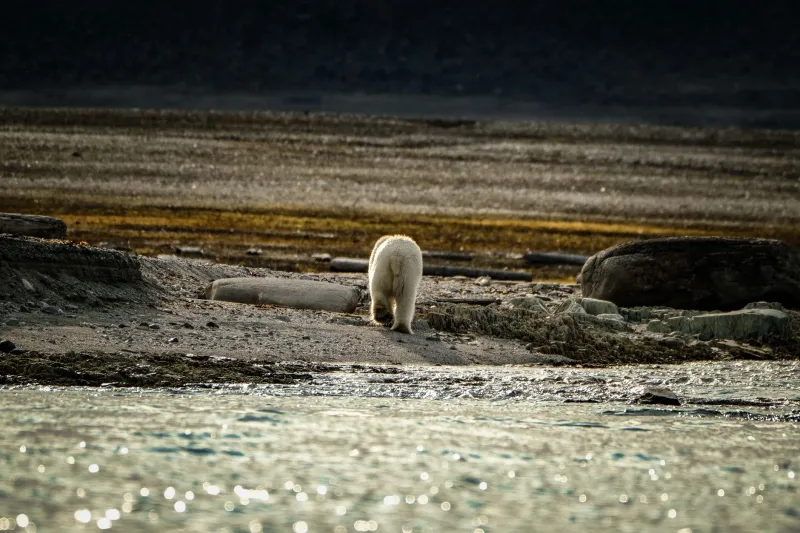
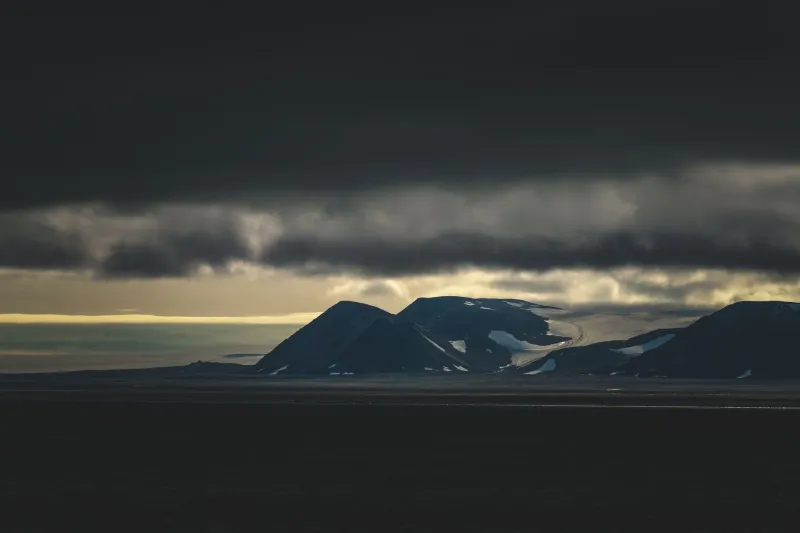
This is not purely subjective. Research in visual neuroscience offers a partial explanation. The eye's cone cells, responsible for color discrimination, function more efficiently under conditions of high contrast and bright, diffuse light—both of which the Arctic provides in abundance. The low-angle light of polar latitudes, particularly during the extended golden hours of Arctic summer, strikes objects at angles that produce shadow gradients unavailable in tropical or temperate environments. The brain, processing these gradients, constructs a richer and more dimensionally complex visual scene.
Cold also affects the eye's tear film and lens mechanics in ways that can, paradoxically, increase optical clarity in the short term—provided conditions are managed properly, which experienced expedition operators ensure. The result is a visual environment that genuinely rewards the observer in ways that photographs, however technically accomplished, rarely convey in full.
Sound Without Interference
The acoustic properties of the polar environment contribute substantially to the sensory intensification that expeditioners report. Arctic air, cold and dense, transmits sound waves with exceptional efficiency. Background noise—the constant low-frequency hum of traffic, climate systems, and human infrastructure that saturates daily life in American cities—is entirely absent. The auditory system, accustomed to filtering an enormous volume of irrelevant input, suddenly has nothing to suppress.
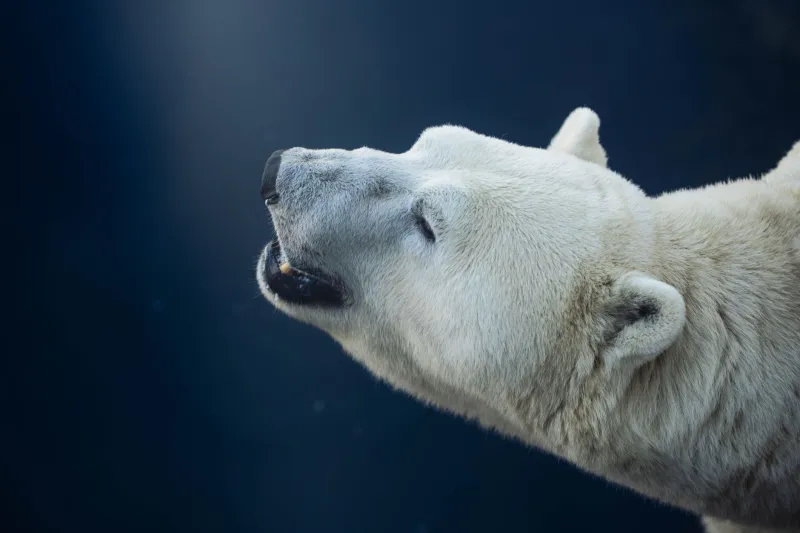
Neurologically, this creates a condition analogous to sensory contrast enhancement. Just as the eye perceives colors more vividly against a neutral background, the ear detects sounds with greater resolution when surrounded by genuine silence. The distant bark of an Arctic fox, the rhythmic breathing of a polar bear moving across snow, the subsonic resonance of calving ice—these arrive not merely as sounds but as events. The brain assigns them weight and significance that, under ordinary acoustic conditions, it would not.
For wildlife viewing, this has immediate practical implications. Guests on Isbjørn Adventure expeditions frequently report detecting animal presence—through sound alone—well before visual confirmation becomes possible. This is not a trained skill. It is a biological response to an environment that removes the noise that ordinarily obscures it.
The Neurochemistry of Presence
Beyond the mechanics of individual senses, the Arctic environment appears to induce a broader neurological state that psychologists and meditation researchers would recognize as heightened present-moment awareness. The mechanisms are multiple and reinforcing.
The physical demands of cold-weather movement—deliberate footfalls on uneven ice, constant micro-adjustments to maintain balance and warmth, the necessity of attending to one's body rather than ignoring it—occupy the prefrontal cortex in ways that interrupt the default mode network. This network, active when the mind is idle or self-referential, is responsible for rumination, distraction, and the background mental noise that most Americans carry through their daily lives without recognizing it as optional. In the Arctic, it goes quiet. Not through discipline or practice, but through necessity.
Simultaneously, the cold-induced norepinephrine response enhances dopamine signaling in pathways associated with attention and reward. The brain, in short, becomes more interested in what is directly in front of it. Expeditioners describe this as a feeling of being fully inhabited in their own experience—present in a way that, for many, has no prior reference point.
What This Means for the Traveler Seeking More
The implications for those considering an Arctic expedition extend well beyond the abstract. If you have pursued mindfulness practice, meditation retreats, or digital detox experiences in search of the clarity that seems perpetually just beyond reach, the physiological evidence suggests you may have been looking in the wrong climate.
The Arctic does not ask you to achieve presence through effort. It imposes presence through environment. The cold, the light, the silence, and the biological systems they activate do the work that years of practice attempt to replicate. The experience is not comfortable in the conventional sense. It is, however, extraordinarily alive.
For photographers, this state translates directly into the quality of observation that separates technically adequate images from genuinely affecting ones. For wildlife enthusiasts, it produces encounters with animals that feel qualitatively different from those experienced through the windshield of a safari vehicle in temperate heat. For travelers who have simply run out of ways to feel genuinely awake, it offers something that no other destination quite replicates.
The Arctic paradox, as those who have experienced it understand, is this: the environment most hostile to comfort is also the one most generous with clarity. The cold does not diminish you. Handled properly, with experienced guides and appropriate preparation, it sharpens you in ways that remain long after the warmth of home has returned.
Isbjørn Adventure designs its expeditions with this physiological reality at the center—not as a marketing abstraction, but as a principle that shapes every itinerary, every pace, and every moment of deliberate stillness built into the journey. The ice, it turns out, is an extraordinary teacher. You simply have to be cold enough to listen.