When the Sky Stays Quiet: Rethinking the Northern Lights as a Promise
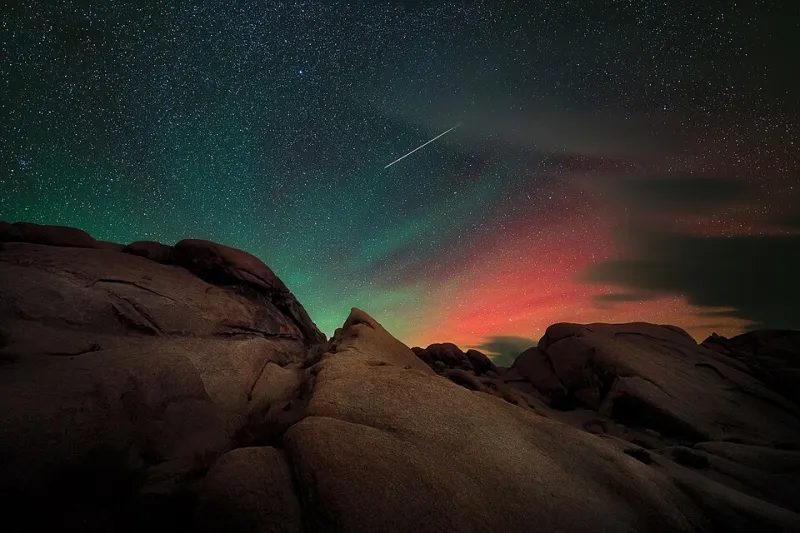
Photo: John D. from Pasadena, USA, CC BY 2.0, via Wikimedia Commons
Northern lights travel has a language problem. Brochures speak of guaranteed sightings, once-in-a-lifetime displays, and the perfect photograph. Guides are asked, sometimes before the first meal, whether the aurora will appear. In 2026, with aurora tourism more competitive than ever, the pressure to promise a spectacle has become part of the product. That is a mistake—not because the lights are unimportant, but because treating them as a delivered experience misunderstands what polar travel actually offers.
The Promise Problem
The aurora is a natural phenomenon shaped by solar activity, cloud cover, latitude, and luck. No operator controls it. Yet the marketing often implies otherwise. Destinations compete on viewing statistics, guides are evaluated by guest satisfaction, and travelers arrive with a mental image already composed: green curtains over a snowy cabin, a camera on a tripod, a moment of awe.
When the sky stays quiet, disappointment is understandable. But the industry's response matters. Some operators build in multiple nights and honest briefings. Others lean on phrases such as aurora borealis likely or high probability, which can sound like a contract. The result is a strange dynamic in which guides become performers asked to produce weather.
What a Quiet Sky Still Offers
A night without the aurora is not an empty night. It is a night of stars, often clearer than anything most Americans see at home. It is the sound of wind against a ridge, the shape of a fjord in darkness, and the slow practice of waiting. It is also a lesson in place. The Arctic is not a backdrop for a light show. It is a working landscape of weather, water, and people who have learned to live with uncertainty.
Photographers often gain more from a quiet sky than they expect. They learn to read forecasts, scout foregrounds, and accept that the best image may be a modest one. Travelers learn something similar. The aurora becomes a possibility rather than a promise, and possibility has its own value.
The Economics of Expectation
Aurora tourism supports guides, drivers, cooks, hotel staff, and local businesses across northern regions. That is real. But when expectations are inflated, the economic pressure lands on the people closest to the weather. Guides may feel compelled to stay out later than is safe, or to oversell a faint glow. Travelers may demand refunds for clouds. Operators may be tempted to promise more than they can deliver.
A more honest model treats the aurora as one element of a winter itinerary. That means offering alternatives: a cultural visit, a snowshoe walk, a lecture on polar history, a good meal, a night in a cabin with a book. It also means briefing guests clearly. Probabilities are not guarantees. A forecast is not a curtain call.
Building an Itinerary Around Place, Not a Photo Op
For travelers planning a 2026 aurora trip, the practical advice is simple. Build in multiple nights. Choose a base with things to do when the sky is closed. Avoid itineraries that hinge on a single viewing night. Ask operators how they handle cloud cover and whether they offer alternative activities. Read the fine print on cancellation and weather policies.
For US travelers, that may mean resisting the urge to schedule aurora viewing around a single long weekend. The farther north you go, the more weather you must respect. A week in one region will usually teach you more than a frantic tour through three. A local guide who reads the weather honestly is worth more than a brochure that promises the sky.
Then lower the stakes. The best aurora trips are not necessarily the most expensive or the most remote. They are the ones with enough time for patience.
Disappointment as Part of the Journey
Disappointment can be useful. It interrupts the assumption that travel is a transaction with a guaranteed return. It asks travelers to notice what else is present: the quiet, the cold, the company, the landscape. In polar travel, uncertainty is not a flaw in the product. It is the product.
The aurora does not owe anyone a show. Neither does the Arctic. What it offers, when we stop demanding a single photograph, is a more honest relationship with the natural world—and a better story than the one we came to collect.